The Picture Room
Regency Gallery
A curated procession of paintings and scenes evoking the world of Pride and Prejudice—estates, ballrooms, gardens, and the quiet interiors of a letter-writing age.
Scenes from the Age of Austen
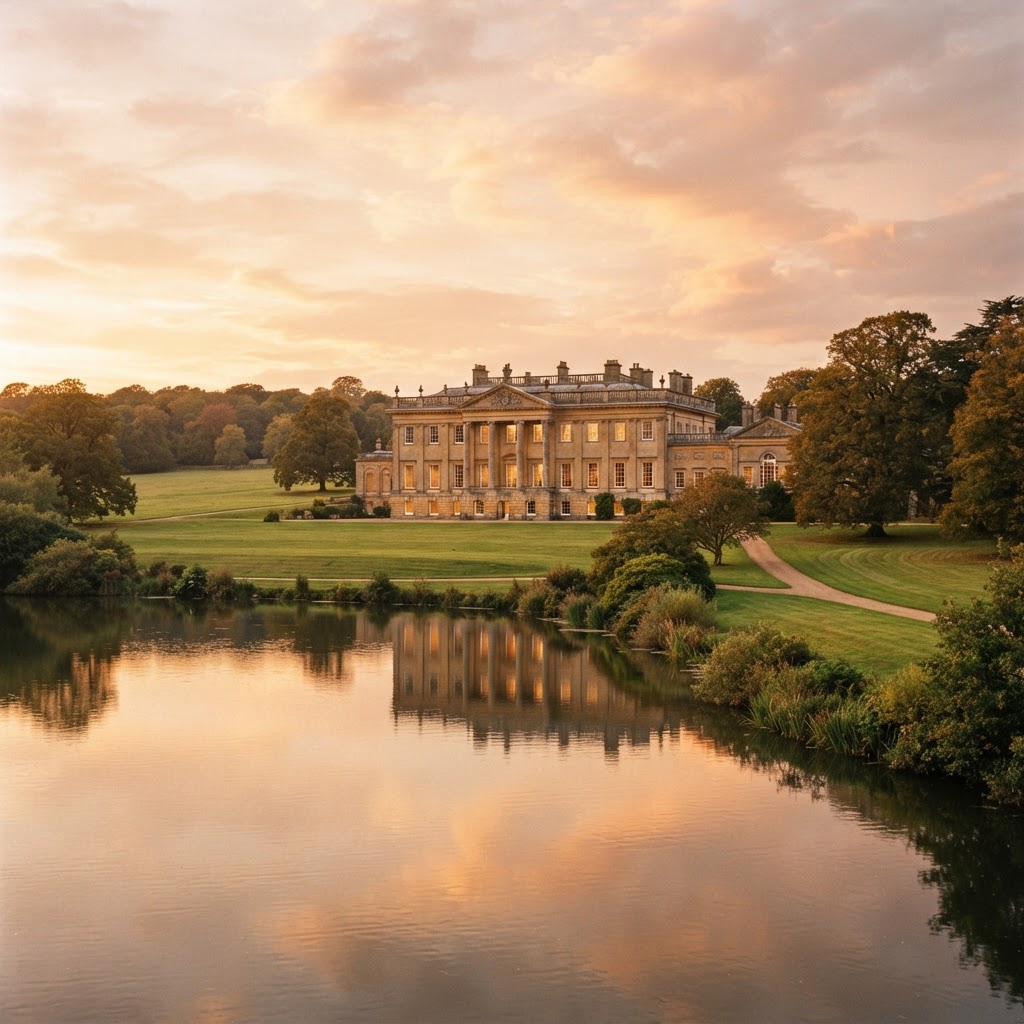
Plate I
The Great Estate
A Palladian house at golden hour, after the manner of Pemberley.
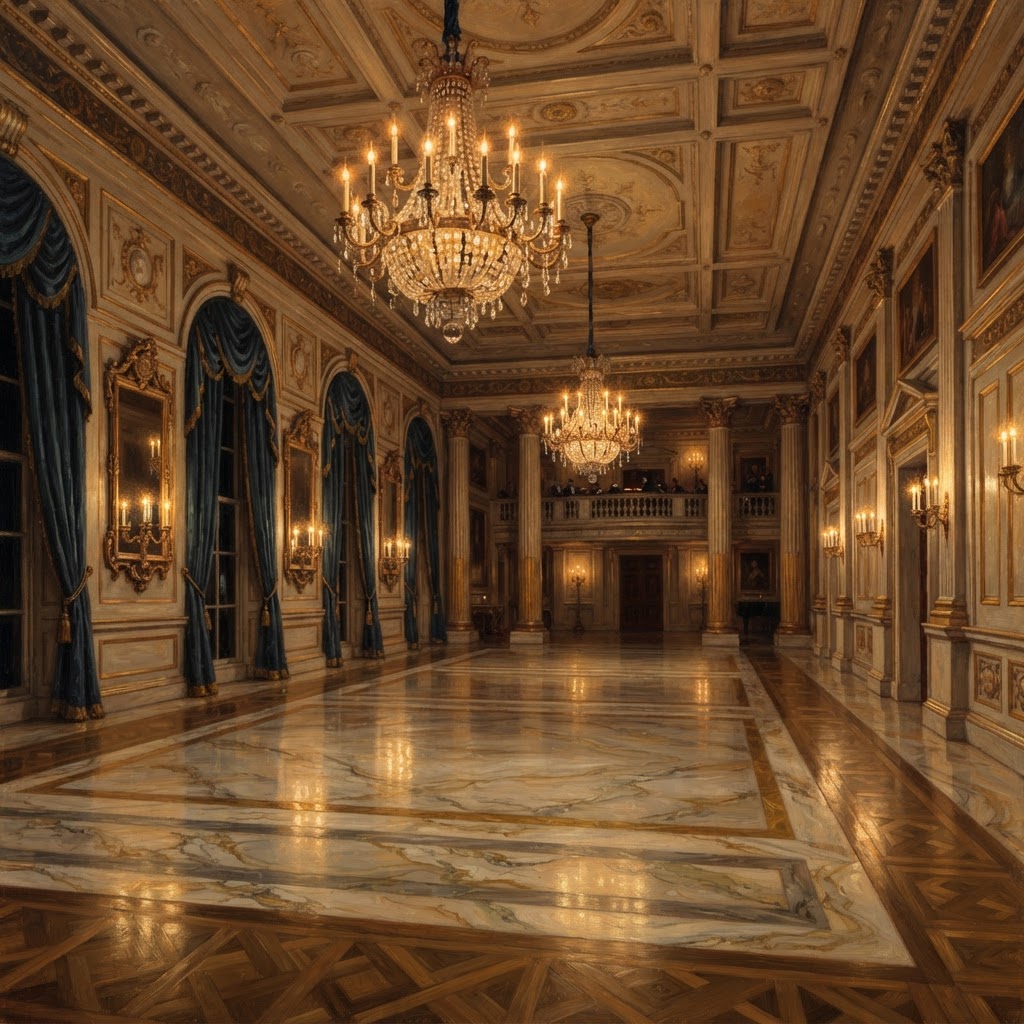
Plate II
The Ballroom
Chandeliers and polished marble, awaiting the first set.
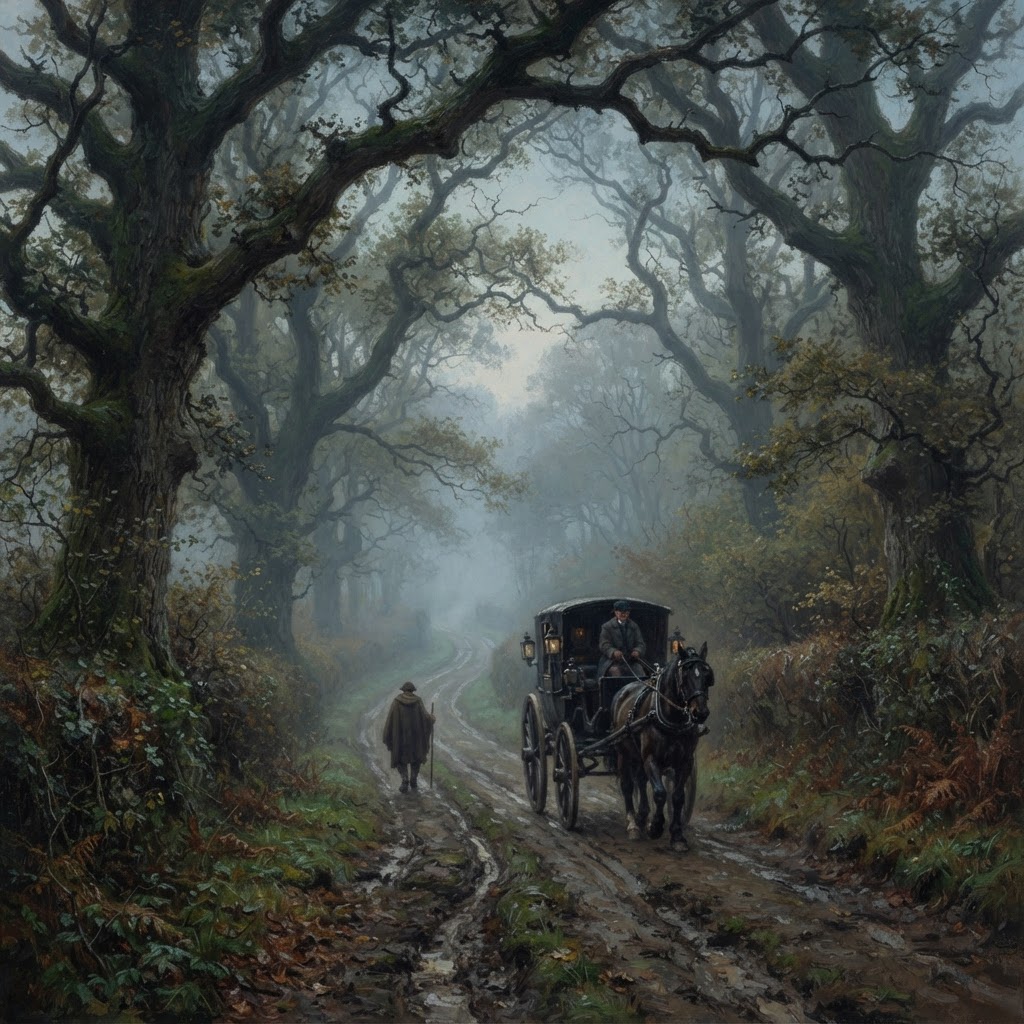
Plate III
The Morning Lane
A carriage at dawn through misted country oaks.
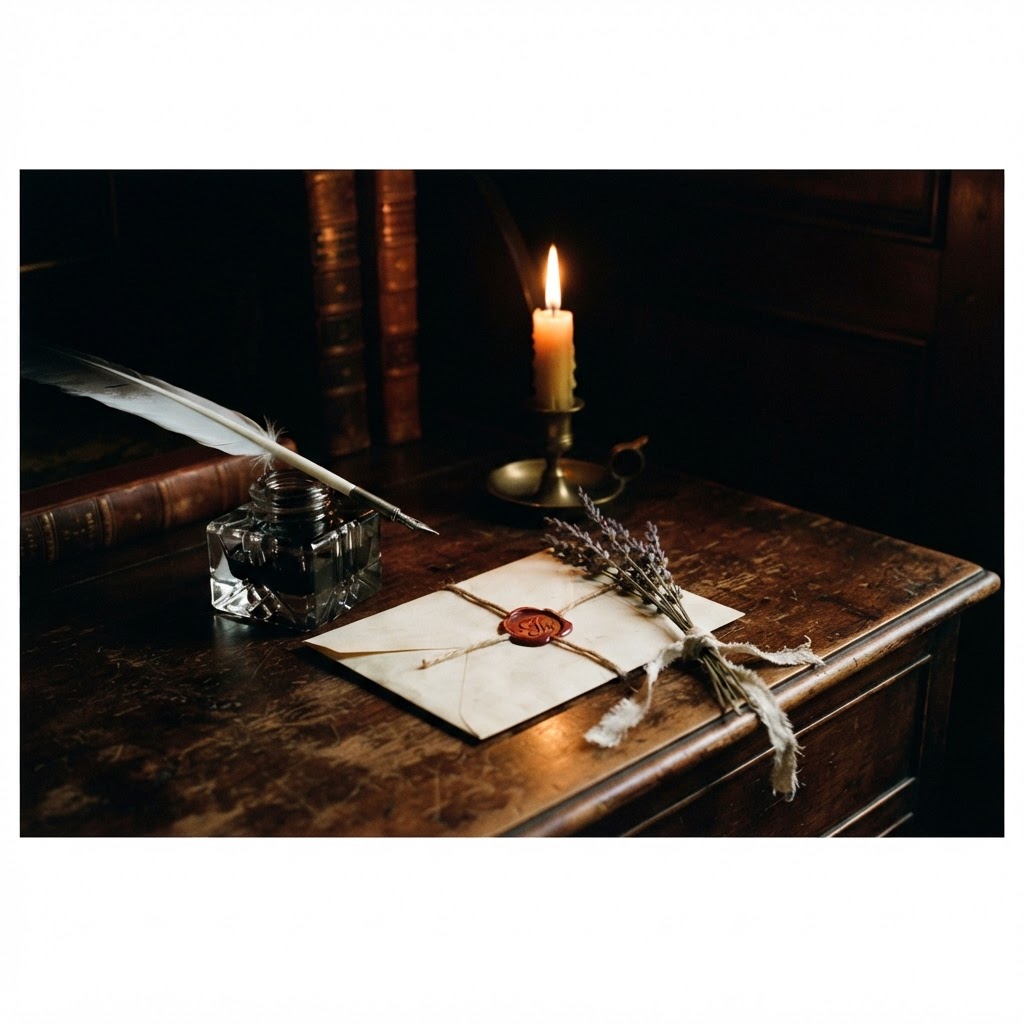
Plate IV
The Writing Desk
Wax, quill, and the morning's correspondence.
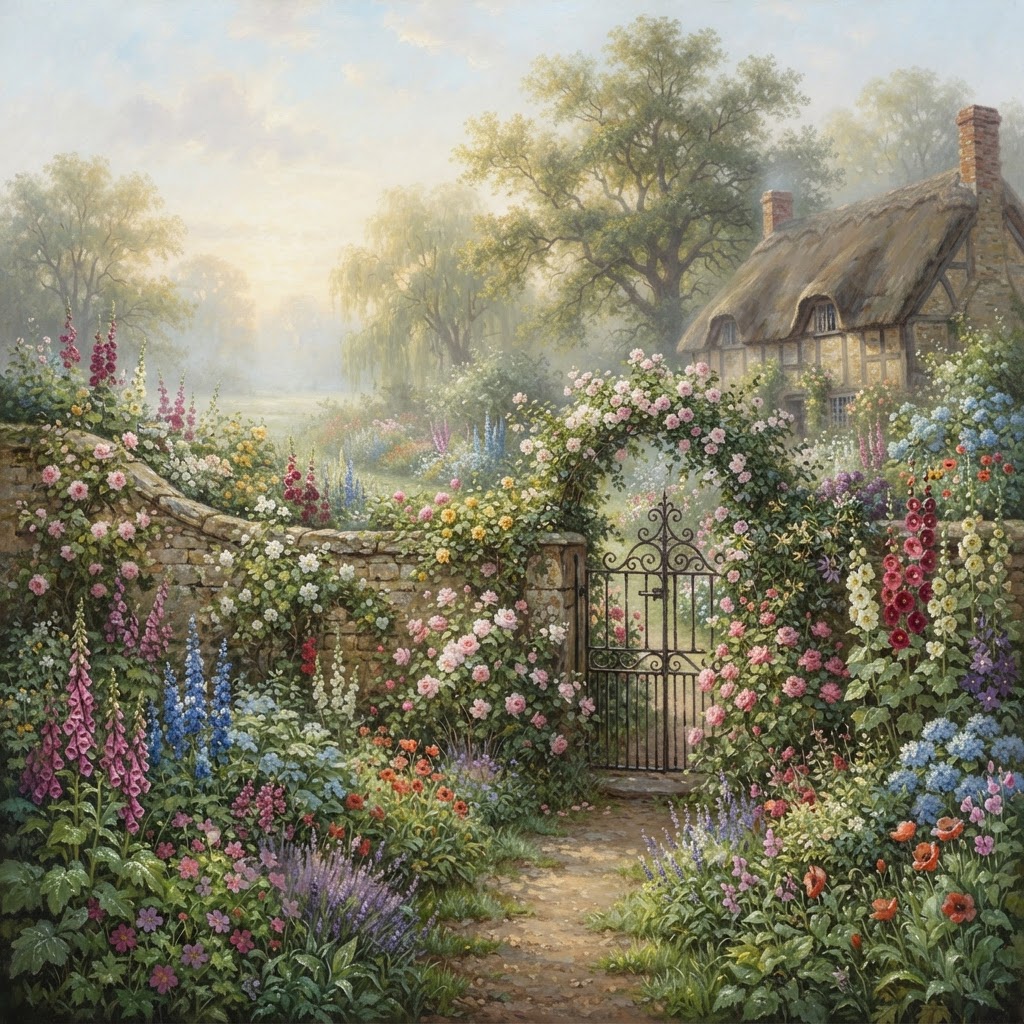
Plate V
The Garden Gate
Roses and hollyhocks about a stone wall in June.
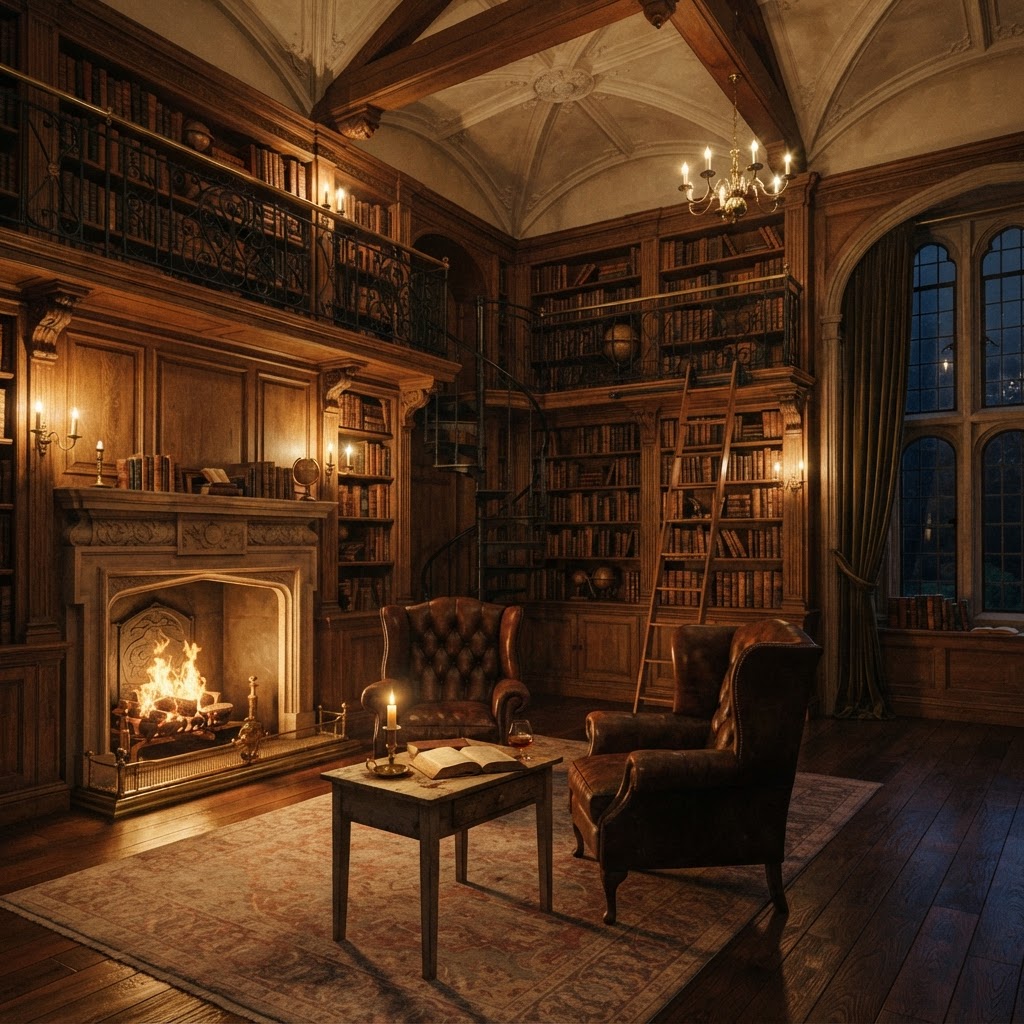
Plate VI
The Library
Oak shelves, a low fire, and the leisure of a rainy day.
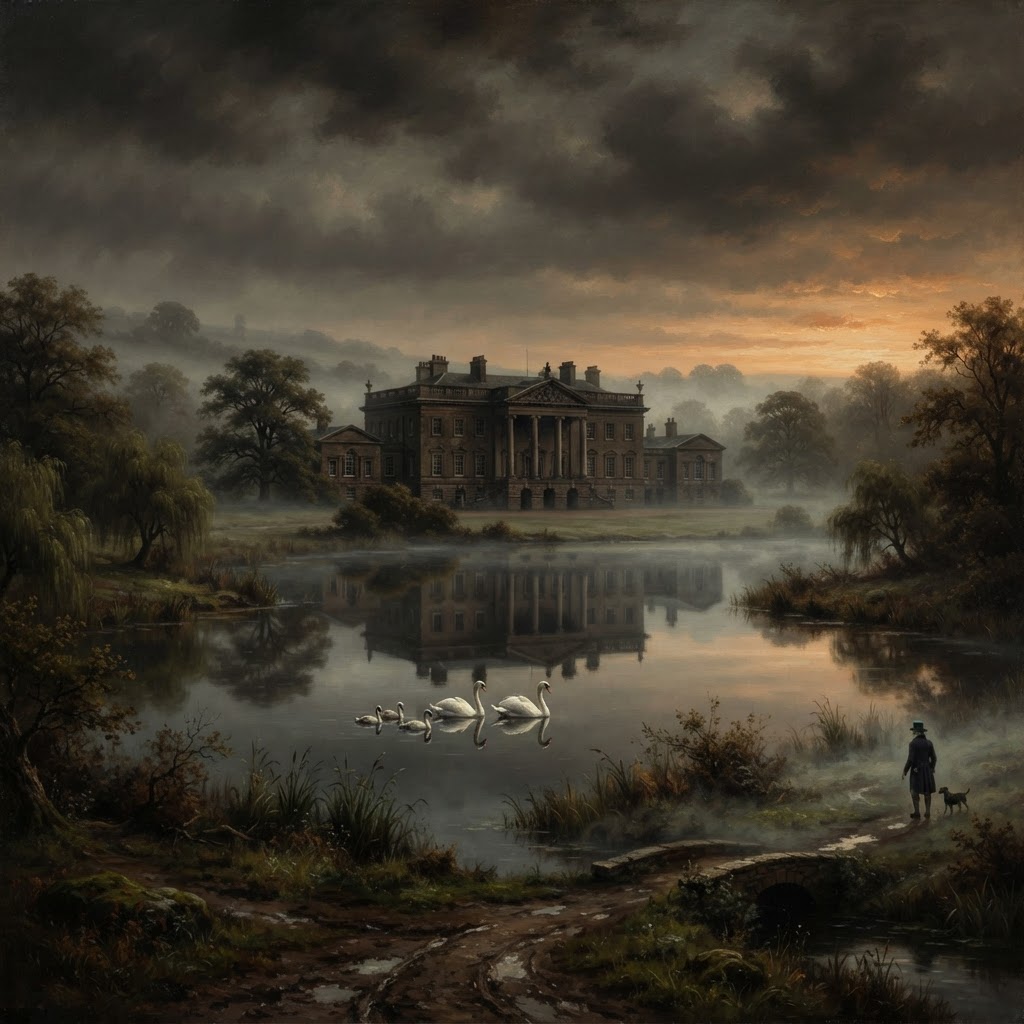
Plate VII
The Sundial Garden
Gravel paths and a distant folly in the afternoon light.
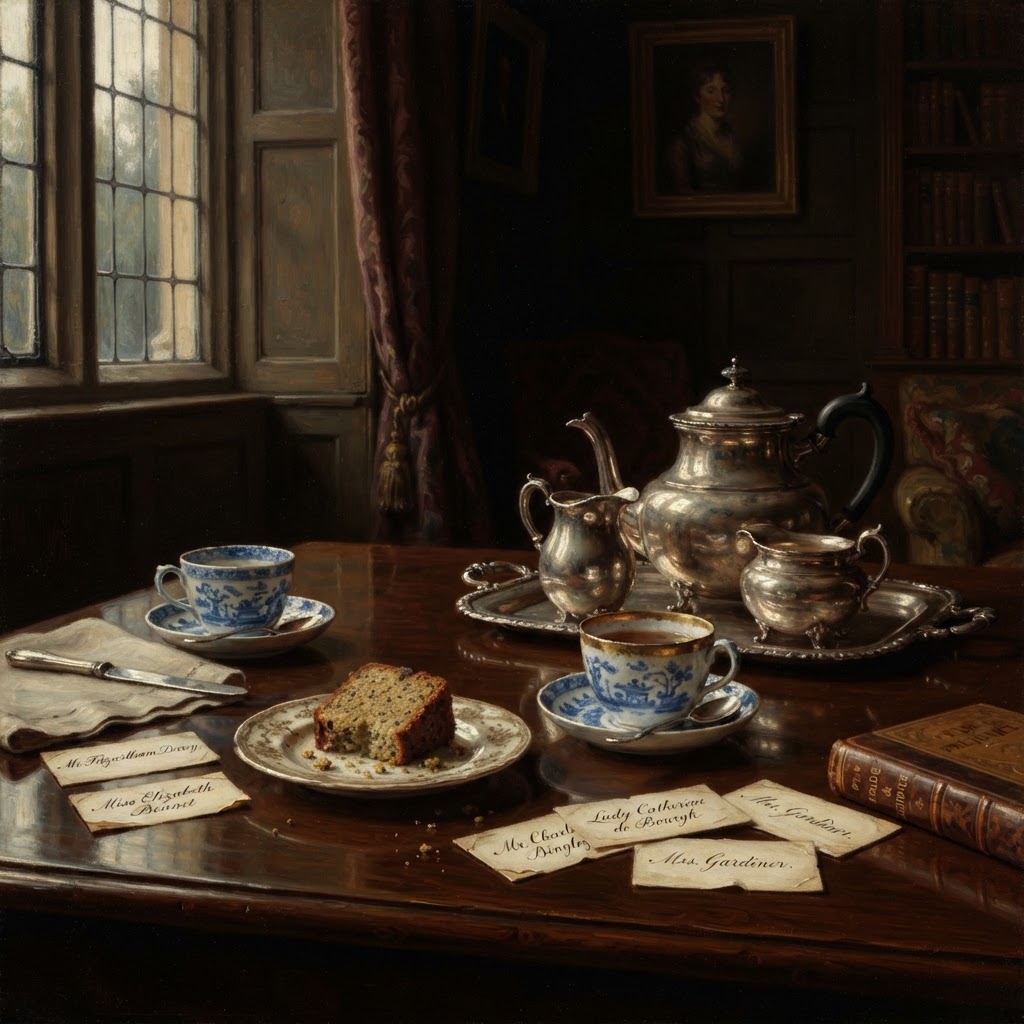
Plate VIII
The Tea Service
Silver, porcelain, and calling cards on a polished table.
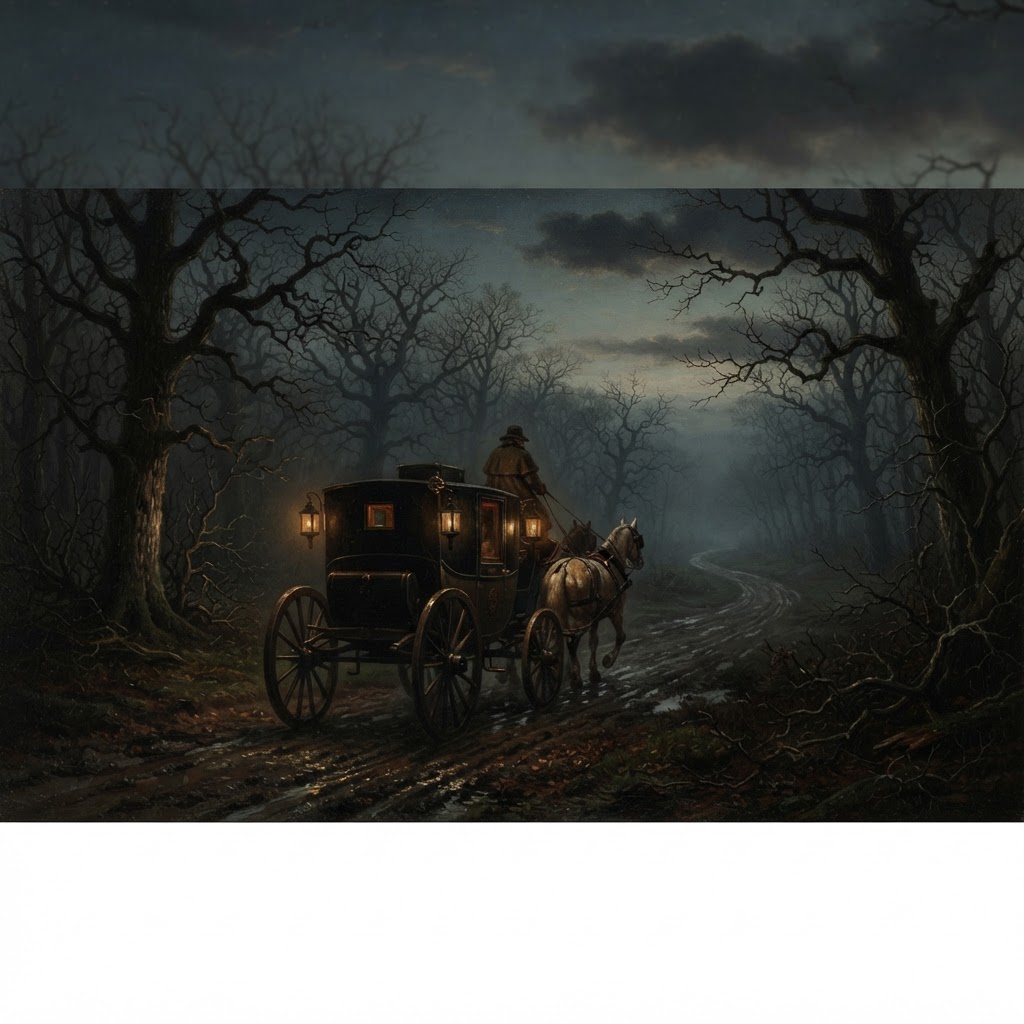
Plate IX
The Carriage at Dusk
Lanterns glowing on a misted country lane at twilight.
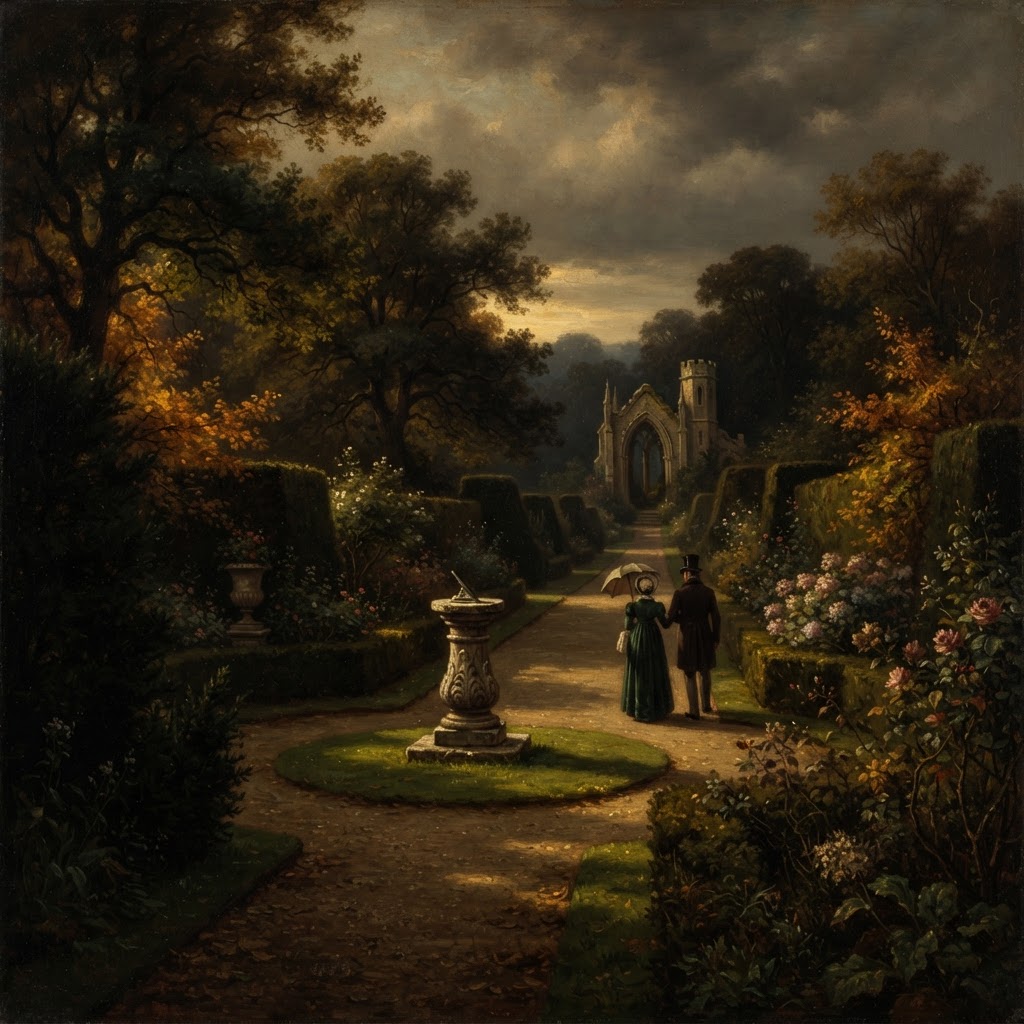
Plate X
The Lake at Dawn
A great house reflected in still water, swans and mist.
Darcy on Film
From the wet shirt to the Hunsford proposal, Mr. Darcy has haunted the romantic imagination for two centuries. A collection of memes, fan art, and devotion — the internet's love letter to the master of Pemberley.
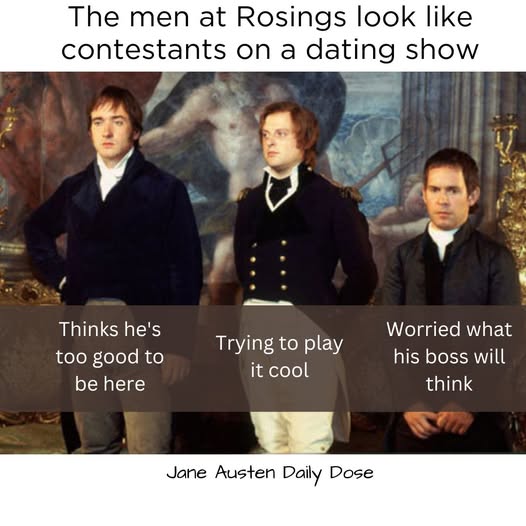
Plate I
Contestants at Rosings
The men at Rosings, looking for all the world like contestants on a dating show. Darcy thinks he's too good to be here; the Colonel plays it cool; Mr. Collins worries what his boss will think.
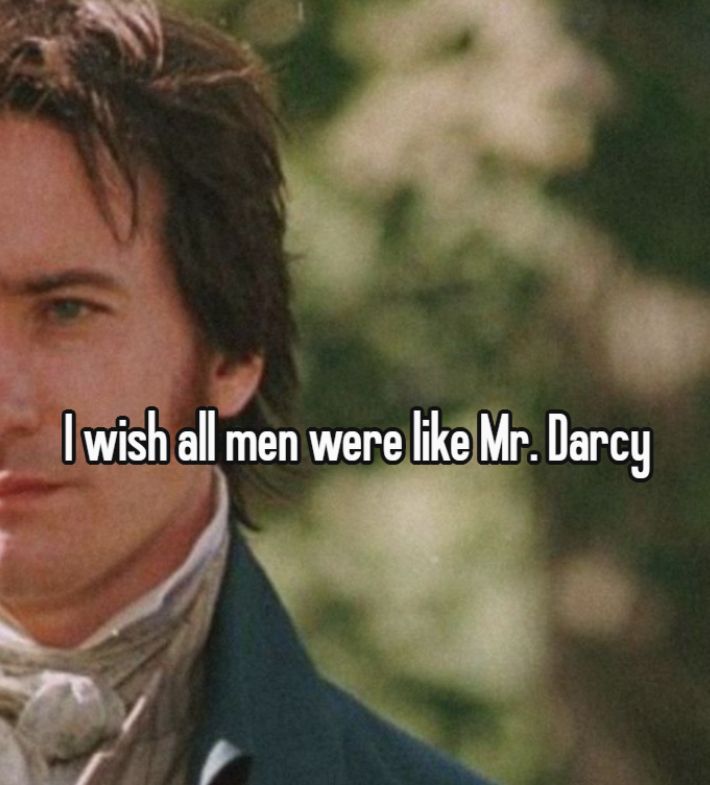
Plate II
I Wish All Men Were Like Mr. Darcy
Mr. Darcy in contemplation — the figure who launched a thousand memes and set the standard by which every Darcy since has been measured.
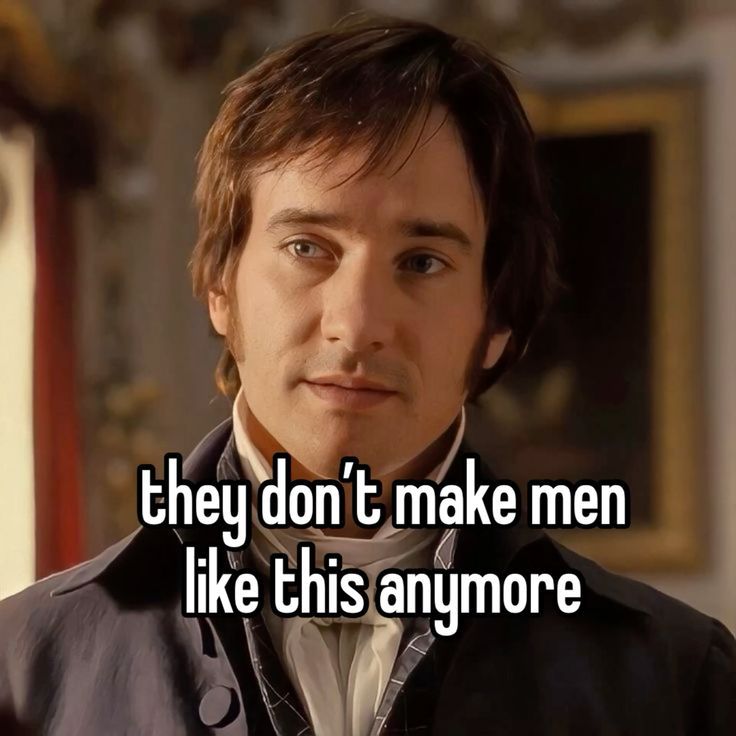
Plate III
They Don't Make Men Like This Anymore
Matthew Macfadyen's Darcy in Joe Wright's 2005 film — the brooding, soft-spoken master of Pemberley who still lives in the collective imagination.
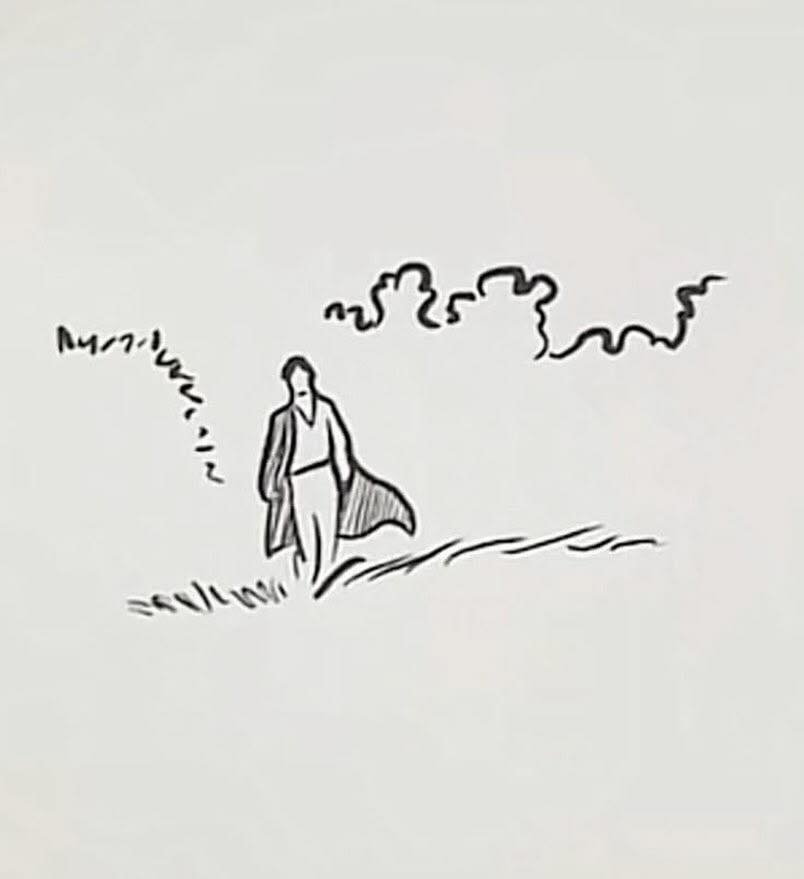
Plate IV
The Darcy Line Drawing
A minimalist ink sketch — Darcy in his greatcoat, striding through the Longbourn countryside with the breeze at his coat tails.
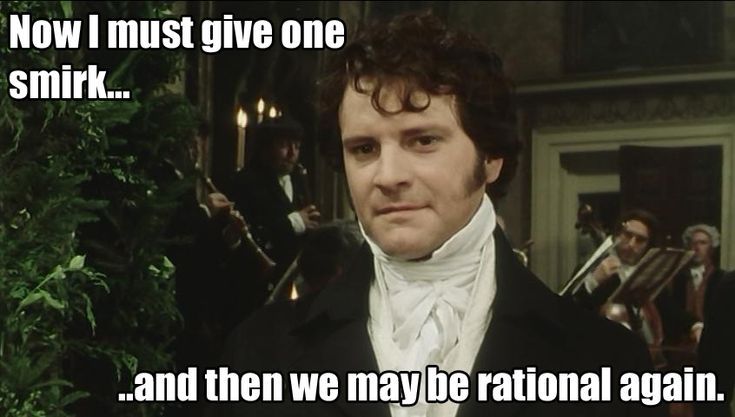
Plate V
Now I Must Give One Smirk
'...and then we may be rational again.' Darcy's wry composure at the Netherfield ball, courtesy of Caroline Bingley's singing at the pianoforte.
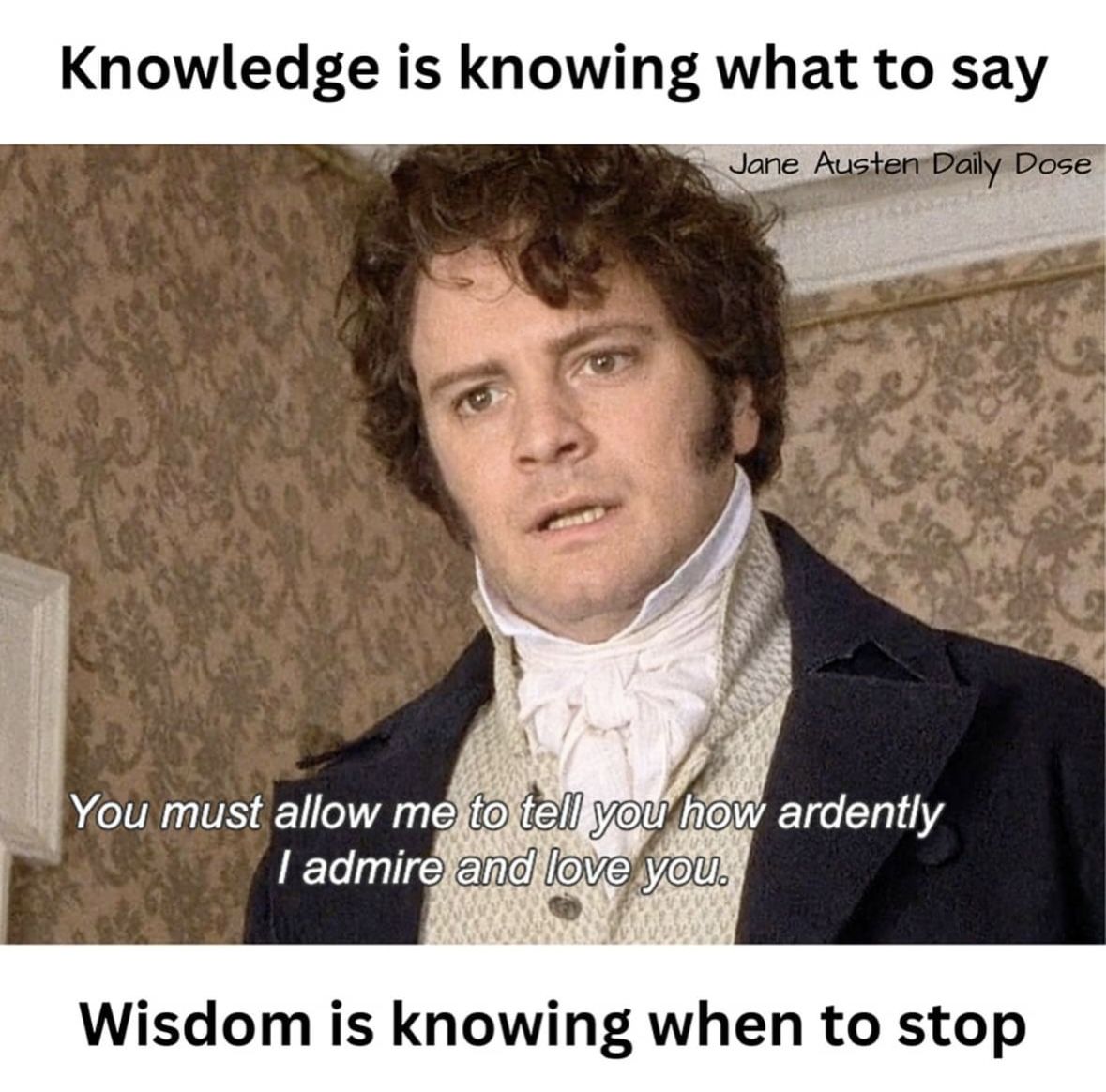
Plate VI
Knowledge and Wisdom
Knowledge is knowing what to say; wisdom is knowing when to stop. Darcy's first proposal at Hunsford, in meme form — the ardently admired love that forgot to read the room.
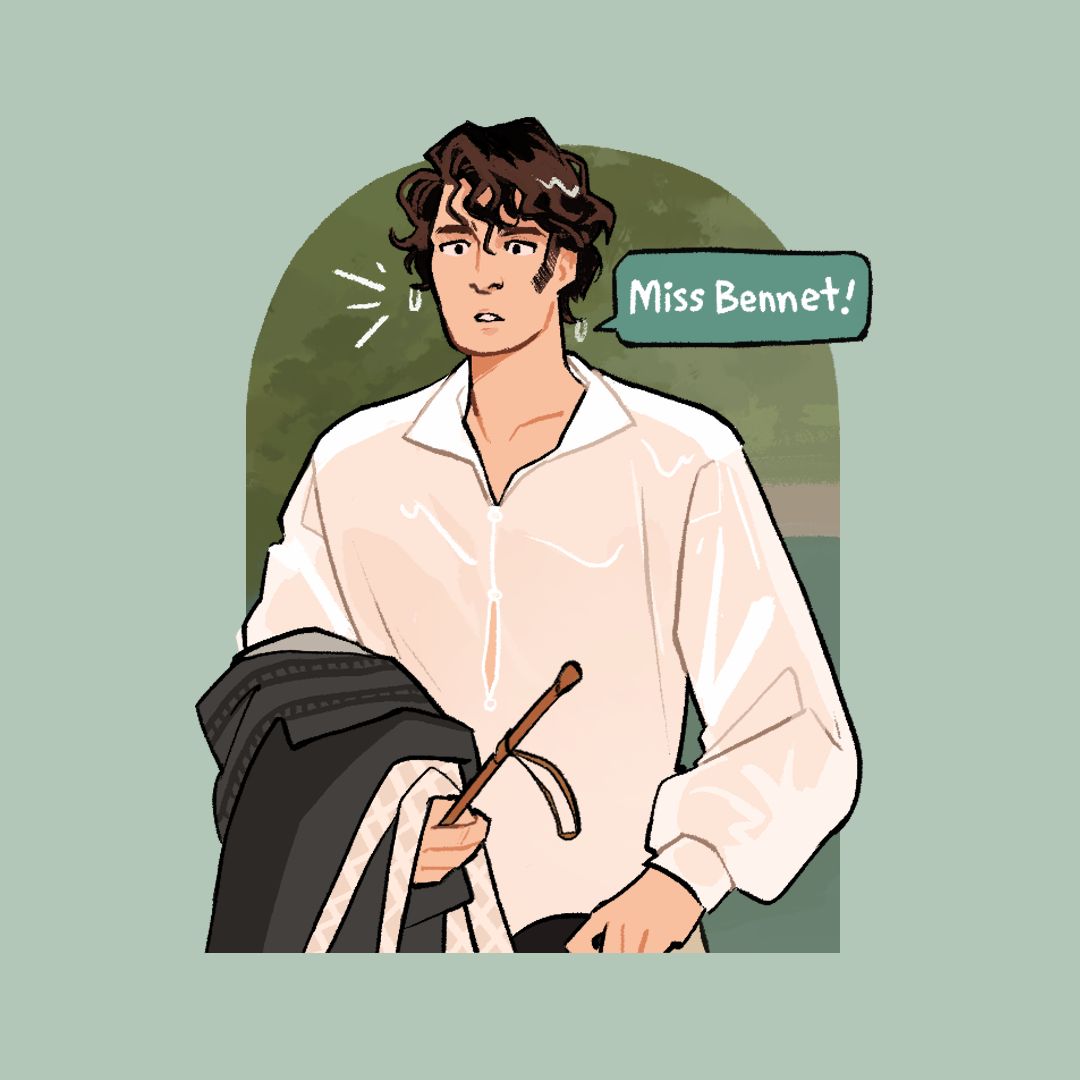
Plate VII
Miss Bennet!
Darcy's startled exclamation upon encountering Elizabeth on the Pemberley grounds — the moment his carefully maintained reserve begins to crack.
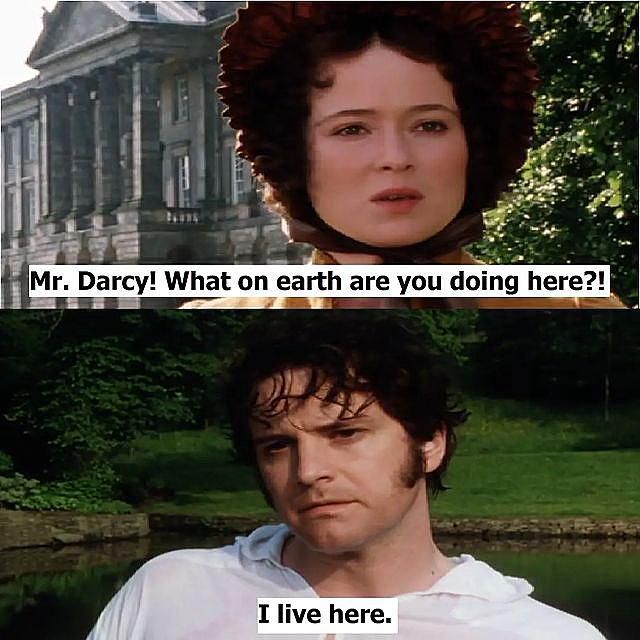
Plate VIII
I Live Here
Elizabeth's astonishment at encountering Darcy on his own estate — and his deadpan reply. The famous wet-shirt scene from the 1995 adaptation, immortalised in meme.
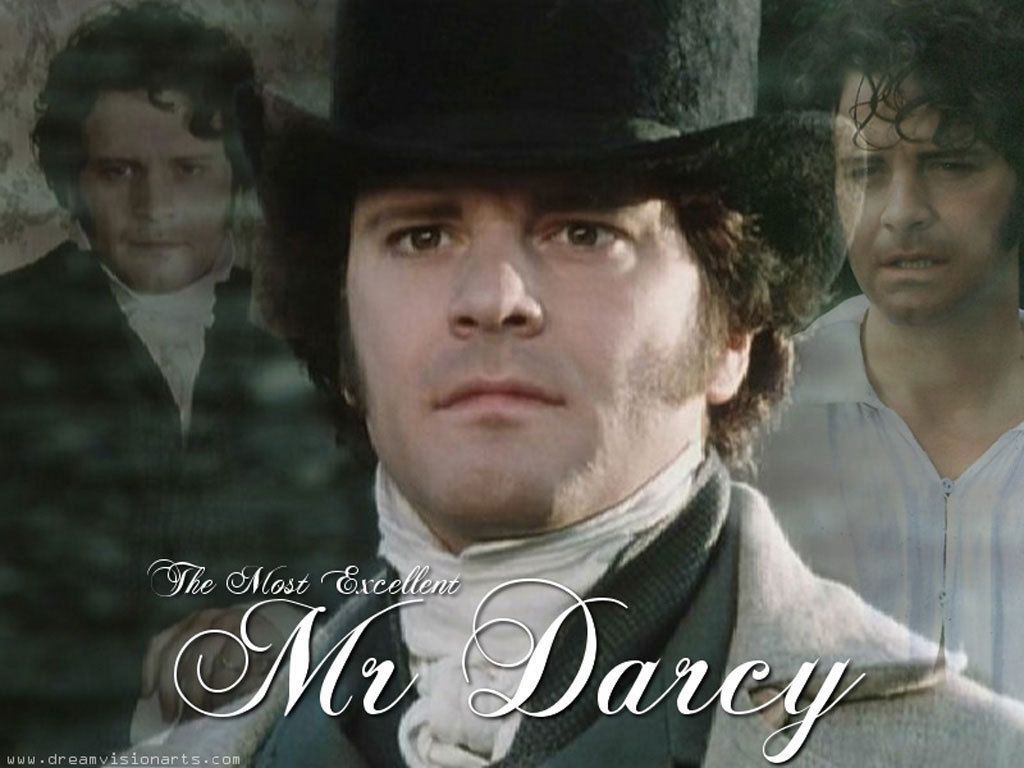
Plate IX
The Most Excellent Mr. Darcy
A layered portrait collage of Darcy in his many guises — top hat, dark coat, and linen shirt — the figure who has haunted the romantic imagination for two centuries.
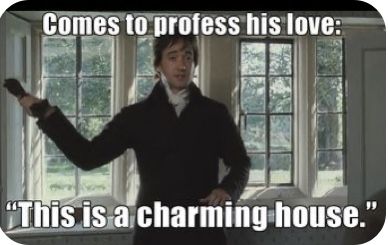
Plate X
A Charming House
'Comes to profess his love: This is a charming house.' Darcy's famously awkward first proposal at Hunsford, where the words and the feeling could not find each other.
Faces of the Regency
The novelists, poets, soldiers, and dandies whose faces defined the age — from Austen herself, drawn by her sister, to the Beau who ruled the cravat, to the Iron Duke who ruled the field.

c. 1810
Jane Austen
The only authenticated portrait of Austen, drawn in watercolour by her sister Cassandra. The novelist of manners, caught in a private, unguarded moment.

1813
Lord Byron
Thomas Phillips's portrait of the poet in Albanian dress — the very year Pride and Prejudice was published. The Romantic hero Austen's novels quietly resist.

c. 1805
Beau Brummell
The arbiter of Regency fashion, engraved from a miniature. Brummell decreed the well-tied cravat and the plain dark coat that transformed menswear.

1814–15
The Duke of Wellington
Thomas Lawrence's triumphant portrait of the Iron Duke, painted for the Waterloo Chamber at Windsor — the soldier who bestrode the Regency age.

1798
Princess Caroline
Thomas Lawrence's portrait of Caroline of Brunswick, the ill-fated Princess of Wales — the royal marriage that scandalised the Regency.
Great Paintings of the Era
The masterworks that hung alongside Austen's novels — Constable's landscapes, Stubbs's horses, Turner's light, and the society portraits of Reynolds, Lawrence, and Raeburn.

1821
The Hay Wain
John Constable's vision of the English countryside — the Suffolk landscape that lay just beyond the drawing rooms of Austen's world.

c. 1762
Whistlejacket
George Stubbs's celebrated portrait of the Marquess of Rockingham's racehorse — the animal painting that redefined the genre.

1844
Rain, Steam and Speed
J.M.W. Turner's rendering of the Great Western Railway — the dawn of the industrial age that would sweep the Regency world away.

c. 1795
The Skating Minister
Henry Raeburn's portrait of the Reverend Robert Walker gliding on Duddingston Loch — elegance and motion in a single, cool image.

1780s
The Brummel Children
Sir Joshua Reynolds's portrait of the young Brummells — the future Beau among them. The great age of portrait painting at its height.

1793
Soldiers of the 10th Light Dragoons
George Stubbs's regimental painting — the cavalry of the Prince Regent's own regiment, the flashiest in the army.
Scenes of Regency Life
The pleasure gardens, the caricatures, and the print-shop windows where Regency society saw itself reflected — Rowlandson's crowded promenades and Gillray's biting satires, the visual commentary of an age that loved to laugh at its own follies.

c. 1785
Vauxhall Gardens
Thomas Rowlandson's panorama of London's pleasure gardens — the promenades, supper boxes, and music where Regency society showed itself after dark.

1810
The Graces in a High Wind
James Gillray's satire of Regency fashions — muslin gowns strained by the wind. The caricaturist who made the age laugh at itself.

1799
The Gout
Gillray's vivid vision of the gout as a demon gnawing at the toe — the affliction of the well-fed Regency gentleman.

1805
The Plumb-pudding in Danger
Gillray's famous caricature of Napoleon and Pitt carving up the globe — the political satire that stocked the print-shop windows.

c. 1785
Entrance to Vauxhall Gardens
Rowlandson's view of the crowds at the garden gate — the great democratic pleasure ground of the Regency evening.

1805
L'Assemblée Nationale
Gillray's vision of fashionable society — a withering look at the Regency's manners, dress, and vanities, laid bare in the print shop.
The Illustrated Novel
From the first edition's title page to the great illustrated editions of the 1890s — C.E. Brock's archaeologically faithful scenes, Hugh Thomson's sprightly pen, and the fashion plates the Bennet sisters might have coveted. The novel as its earliest illustrators imagined it.

1813
The First Edition
The title page of the first edition of Pride and Prejudice, published in three volumes by Thomas Egerton on 28 January 1813. Austen sold the copyright for £110.

Ch. 58
'All Was Acknowledged'
C.E. Brock's illustration of the moment Darcy and Elizabeth finally speak openly to one another — half the night spent in conversation at Longbourn.

Ch. 19
'I Singled You Out'
Mr. Collins's proposal to Elizabeth, as rendered by Brock — the pompous clergyman's rehearsed address, delivered with perfect self-absorption.

Ch. 8
'If I Were as Rich as Mr. Darcy'
Mrs. Bennet's familiar refrain, illustrated by Brock — the name of Darcy never far from her matchmaking mind, even at Netherfield.

Ch. 55
Bingley and Jane
The moment Bingley returns to Jane at last, in Brock's tender rendering of their long-awaited reconciliation at Longbourn.

Ch. 3
Darcy at Netherfield
The proud master as Brock imagined him — standing apart at the Meryton assembly, above the company and below none.

Ch. 59
Darcy and Sir William
Brock captures a quiet moment of social grace — Darcy listening patiently to the well-meaning Sir William Lucas, his pride now softened.

Ch. 14
'Mr. Collins Didn't Read Novels'
Hugh Thomson's sprightly pen captures Mr. Collins protesting his disapproval of novels — while dining at Lucas Lodge, no less.

1895
Elizabeth Bennet
Brock's portrait of Elizabeth — the fine eyes, the intelligent gaze, the quiet defiance that Darcy could not resist.

c. 1820
Morning Dress
A Regency morning dress from Ackermann's Repository — the very periodical the Bennet sisters might have pored over for the latest London fashions.