The Screen
Film Adaptations
From MGM's Golden Age to the BBC's cultural landmark and beyond — three major screen adaptations, each a portrait of its era.
Major Screen Adaptations

Pride and Prejudice
Robert Z. Leonard · Greer Garson, Laurence Olivier
Hollywood's first sound adaptation of Austen's novel arrived in 1940, produced by MGM at the height of the studio's golden age. The script was co-written by Aldous Huxley — the celebrated author of Brave New World — who infused the screenplay with sharp satirical wit. Greer Garson stars as Elizabeth opposite Laurence Olivier's Darcy, both at the peak of their star power.
Awards & Recognition
Academy Award for Best Art Direction (Black-and-White)

Pride and Prejudice
Simon Langton · Jennifer Ehle, Colin Firth
Widely regarded as the definitive screen adaptation, the BBC's six-episode miniseries achieved near-mythical status upon its broadcast in 1995. Andrew Davies's screenplay is celebrated for its fidelity to Austen's dialogue and for making Darcy's private world visible — including the now-iconic lake scene, which was never in the novel.
Awards & Recognition
BAFTA TV Award for Best Actress (Jennifer Ehle); Primetime Emmy for Costume Design
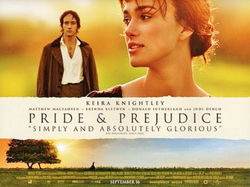
Pride & Prejudice
Joe Wright · Keira Knightley, Matthew Macfadyen
Joe Wright's feature debut brought Austen into the 21st century with sweeping cinematography, a radiant Keira Knightley, and a deliberately 'muddy-hem' aesthetic that rejected the pristine period-drama tradition. The film grossed $131.9 million worldwide and earned Knightley an Academy Award nomination for Best Actress at age 20.
Awards & Recognition
4 Academy Award nominations; BAFTA for Outstanding Debut (Joe Wright)
More Adaptations & Spin-offs

Bride & Prejudice
Gurinder Chadha · Aishwarya Rai, Martin Henderson
A Bollywood-infused musical adaptation that transposes the story to modern-day Amritsar and London, with Aishwarya Rai as Lalita Bakshi (Elizabeth) and Martin Henderson as American hotel heir William Darcy.

The Lizzie Bennet Diaries
Hank Green, Bernie Su · Ashley Clements, Daniel Vincent Gordh
An Emmy-winning modern adaptation told through vlogs and social media. Elizabeth Bennet is a graduate student documenting her life; the story unfolds across YouTube, Twitter, and Tumblr in real time. A landmark in transmedia storytelling.

Pride and Prejudice and Zombies
Burr Steers · Lily James, Sam Riley, Matt Smith
Based on Seth Grahame-Smith's mashup novel, the Bennet sisters are trained zombie hunters in Regency England. Lily James stars as a katana-wielding Elizabeth, with Matt Smith stealing scenes as the absurdly pompous Mr. Collins.

Death Comes to Pemberley
Daniel Percival · Anna Maxwell Martin, Matthew Rhys, Jenna Coleman
An adaptation of P.D. James's mystery sequel, set six years after Elizabeth and Darcy's marriage. When a body is discovered in Pemberley's woods on the eve of the annual ball, the Darcys are thrust into a murder investigation.

Fire Island
Andrew Ahn · Joel Kim Booster, Bowen Yang, Conrad Ricamora
A modern LGBTQ+ retelling set on Fire Island's gay vacation scene. Joel Kim Booster's Noah (Elizabeth) navigates class and romance alongside best friend Howie (Jane). Conrad Ricamora plays the aloof Will (Darcy). Sharp, funny, and culturally specific.
Bridget Jones's Diary
Sharon Maguire · Renée Zellweger, Colin Firth, Hugh Grant
Helen Fielding's modern loose adaptation — itself inspired by the 1995 BBC series. Colin Firth plays Mark Darcy (named for his P&P character), while Hugh Grant's Daniel Cleaver is a Wickham-esque cad.
The 1995 Adaptation
Andrew Davies's six-part BBC adaptation, directed by Simon Langton and starring Colin Firth and Jennifer Ehle, transformed Pride and Prejudice for a new generation. From the Meryton assembly to the Pemberley lake, these are the images that fixed the novel in the modern imagination.
1995
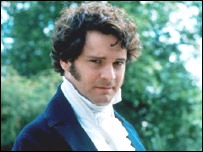
The Master of Pemberley
Colin Firth as Mr. Darcy in the BBC's 1995 adaptation — the performance that defined the role for a generation and set the standard for every Darcy to follow.
1995
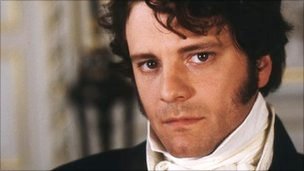
A Promotional Portrait
The proud master of Pemberley, in a promotional portrait from the 1995 series. Firth's Darcy — reserved, intense, and quietly haunted by his own pride.
1995
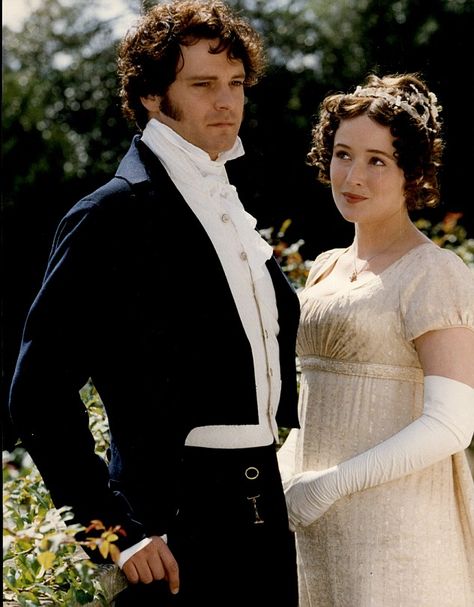
Darcy and Elizabeth
Darcy and Elizabeth together at last — the central pairing of the 1995 adaptation, in a moment of quiet understanding after the storm of misunderstanding has passed.
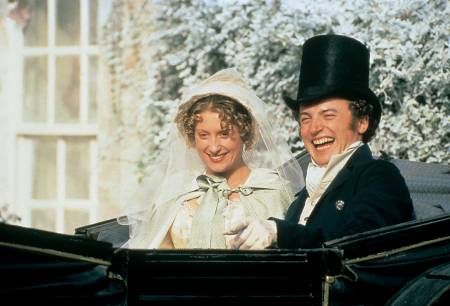
1995
The Carriage Ride
A carriage journey — the Regency equivalent of a drive in the country. Laughter and conversation on the road between Longbourn and wherever duty calls next.
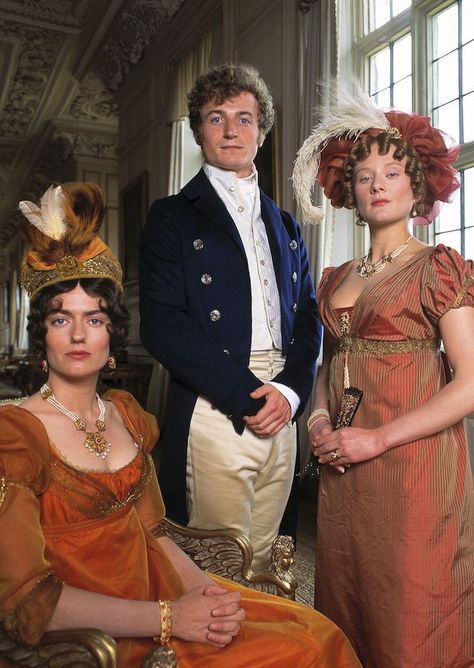
1995
The Drawing Room
Characters from the 1995 adaptation, arranged in a formal portrait — the opulent interiors and carefully observed costumes that made the series a benchmark for period drama.
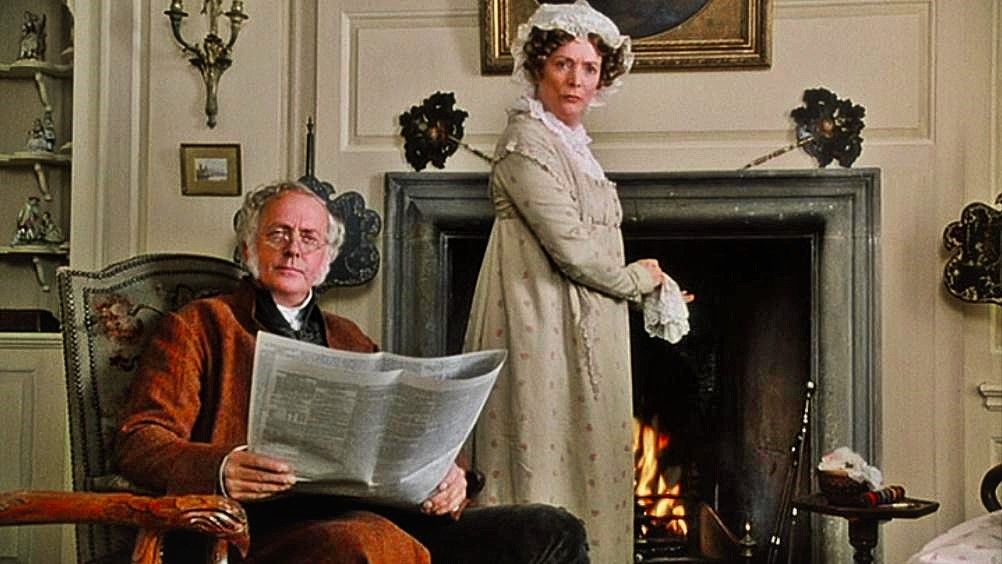
1995
Mr. and Mrs. Bennet at Longbourn
Mr. Bennet behind his newspaper, Mrs. Bennet by the fire — the domestic comedy that opens the novel, perfectly captured in Benjamin Whitrow and Alison Steadman's indelible performances.
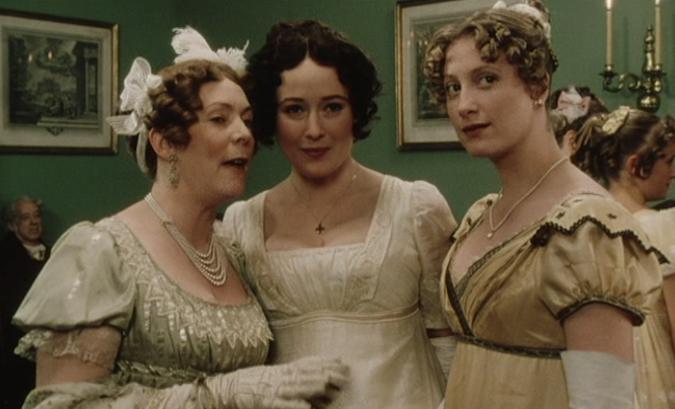
1995
The Bennet Women
Mrs. Bennet with her two eldest daughters, Elizabeth and Jane — the contrasting temperaments of the Bennet household, gathered against the dark green of the Longbourn drawing room.
1995
Three Scenes
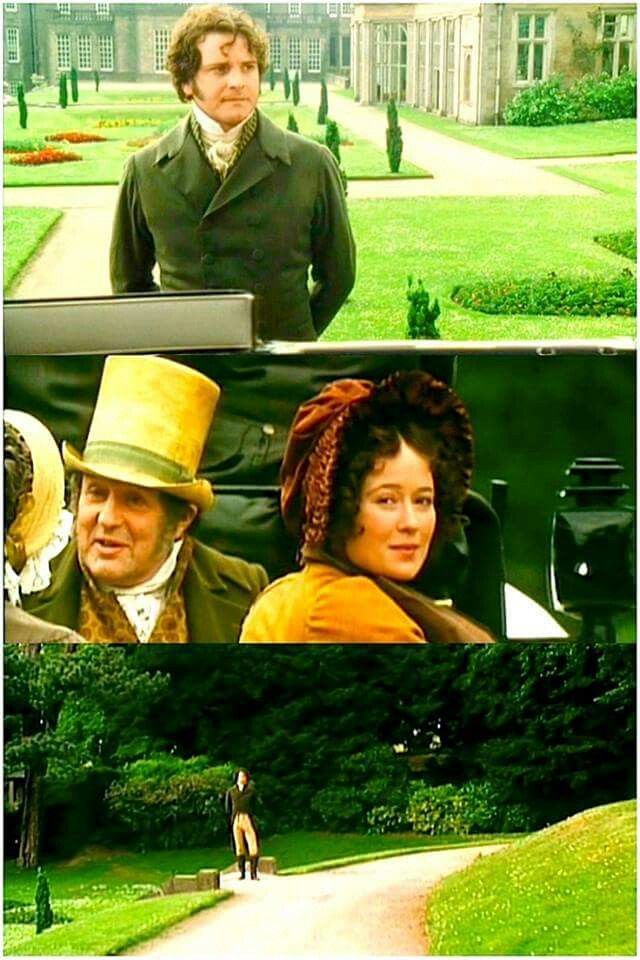
A triptych from the 1995 adaptation — Darcy on the Pemberley lawns, a carriage conversation, and a solitary walk through the grounds. Three moments that distil the series' visual language.
1995
Lyme Park — Pemberley
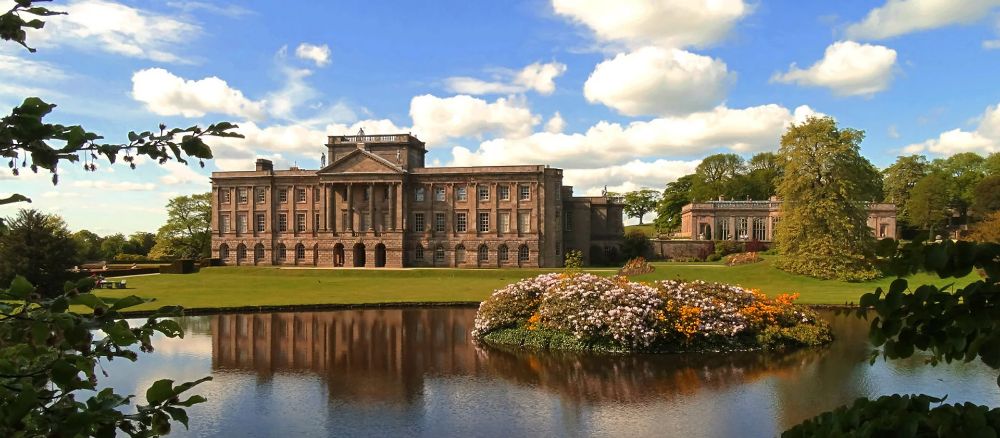
Lyme Park, Cheshire — the exterior of Pemberley in the 1995 adaptation. It was here that Elizabeth Bennet first saw the great house and felt 'that to be mistress of Pemberley might be something.'
Illustration
'You Mistake Me, My Dear'
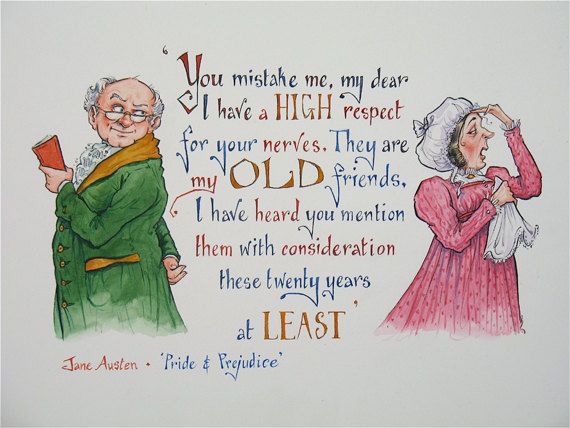
'I have a high respect for your nerves. They are my old friends.' Mr. Bennet's famous sardonic reply to his wife, rendered as a literary illustration — the opening exchange that sets the novel's comic tone.
1995
Darcy and Bingley
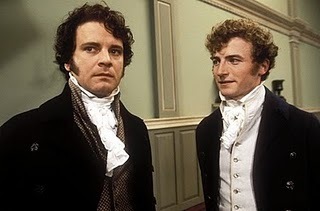
Mr. Darcy and Mr. Bingley — the contrasting friends, one proud and reserved, the other open and amiable. The sage-green panels of a Regency drawing room frame the pair whose temperaments drive the novel's twin romances.
1995
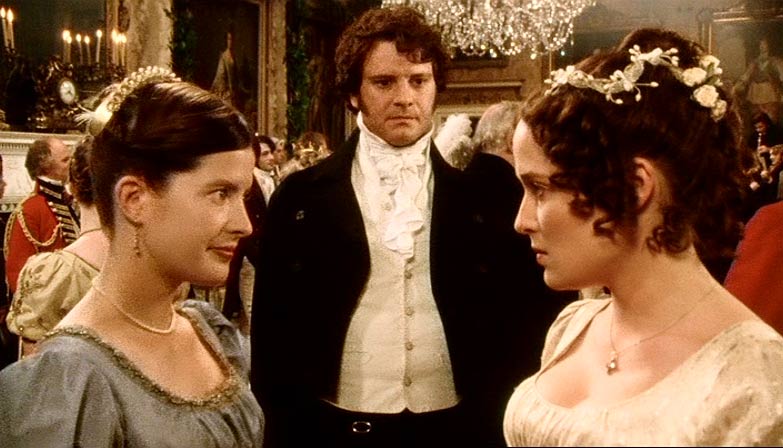
At the Ball
Darcy between two ladies beneath the chandelier's glow — the Meryton assembly, where pride and prejudice first take hold, and where every glance is measured against a fortune.
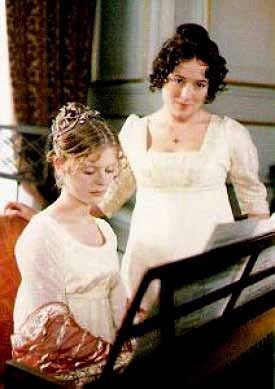
1995
At the Pianoforte
At the pianoforte — the accomplishment that marked a young woman of gentle breeding. A scene of music and quiet rivalry in the drawing room, where accomplishments are displayed and judgments formed.
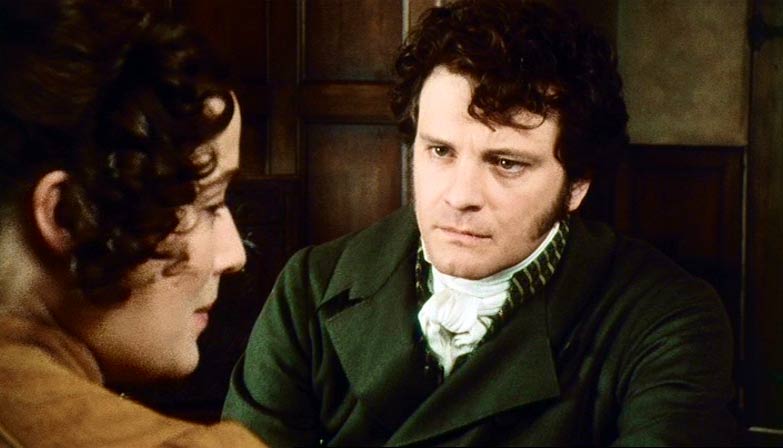
1995
Close Conversation
Darcy and Elizabeth in close conversation — the intensity of two minds meeting across the divide of class and temper, in the warm candlelight of a paneled interior.
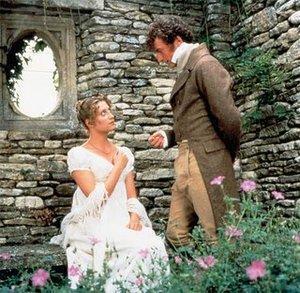
1995
The Garden Wall
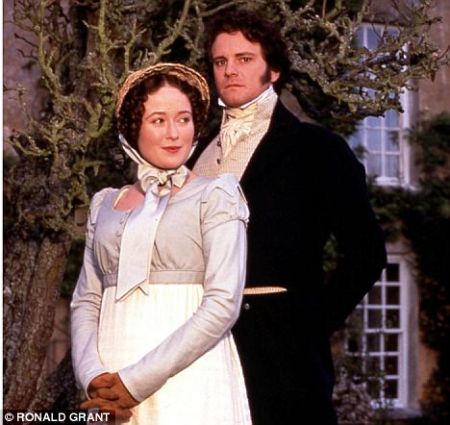
Elizabeth and Darcy in the garden — a conversation by the stone wall, where the formal garden meets the wild. The charged exchange that turns the novel's tide.
1995
Before the Great House
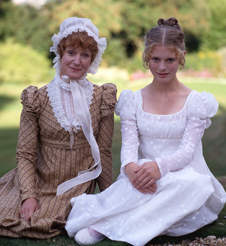
Elizabeth and Darcy before the great house — the couple in the grounds of Pemberley, where first impressions give way to something deeper, and the landscape itself becomes a character.
1995
Mrs. Bennet and Lydia
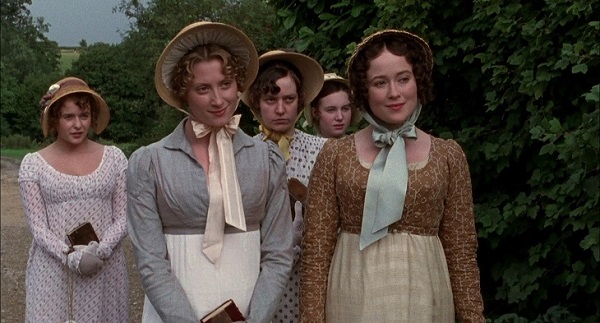
Mrs. Bennet and Lydia outdoors — the mother and her most spirited daughter, sharing gossip and schemes on the Longbourn lawn. Two generations of the same restless energy.
1995
The Bennet Sisters Abroad
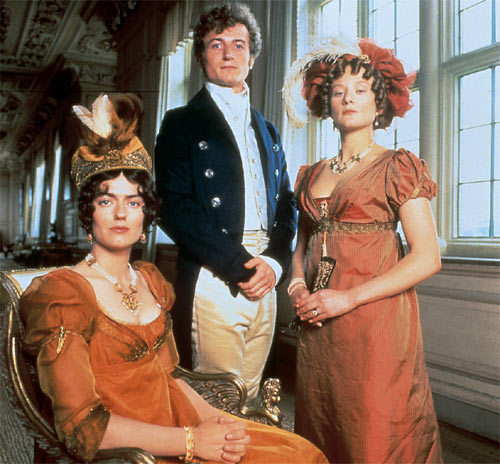
The Bennet sisters walking out together — bonnets and day dresses on the country lanes of Hertfordshire, where news of officers and fortunes travels faster than any carriage.
1995
The Drawing Room
Characters from the 1995 adaptation arranged in a formal portrait — the opulent interiors and carefully observed costumes that made the series a benchmark for period drama.
1995
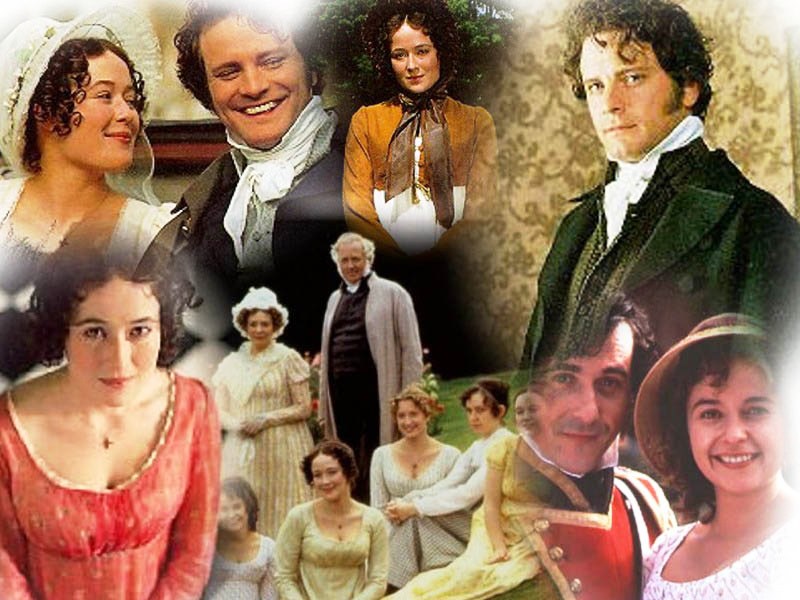
A Montage of the Series
A collage of the faces and moments that defined the 1995 adaptation — from the Bennet family to the regimental officers, the characters who have lived in the collective imagination for three decades.
1995
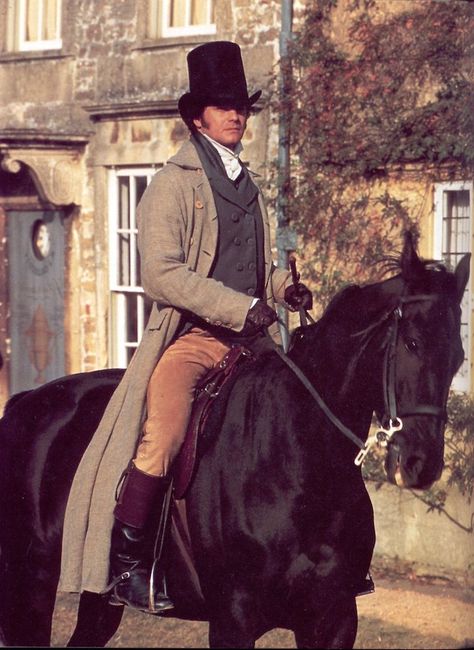
Darcy on Horseback
Darcy on horseback — the master of Pemberley arriving in state. The horseman, the top hat, and the great coat that announced a man of ten thousand a year before he spoke a word.
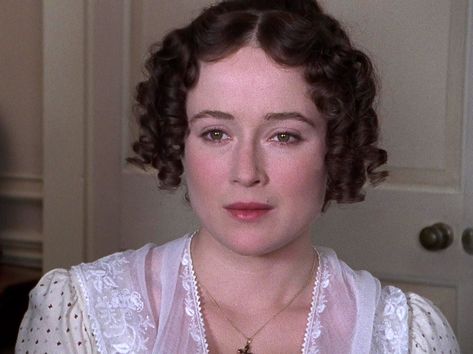
1995
Elizabeth Bennet
Elizabeth Bennet — Jennifer Ehle's portrait of the heroine, with the fine eyes that haunted Darcy. The intelligent gaze and quiet defiance at the heart of the 1995 adaptation.
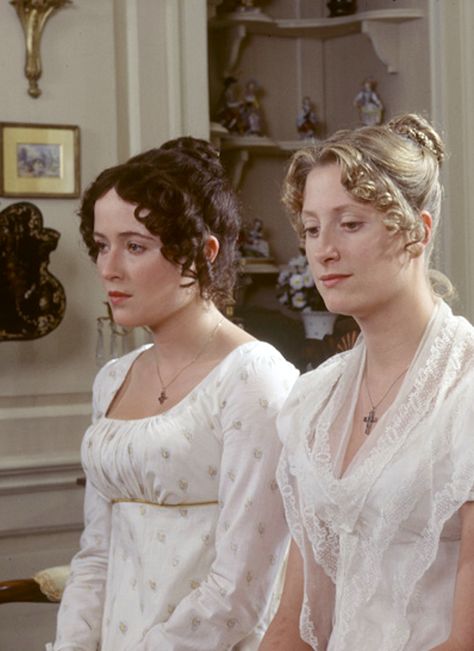
1995
Elizabeth and Jane
Elizabeth and Jane Bennet — the two eldest sisters, one dark and spirited, the other fair and gentle. The bond at the heart of the novel, the confidantes who share every hope and every slight.
1995
The Bennet Family
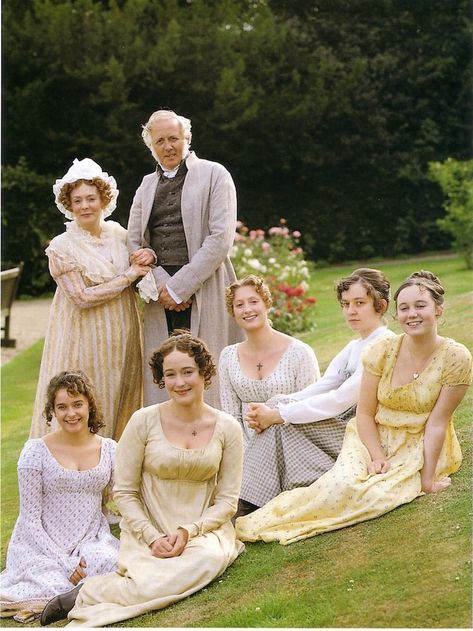
The Bennet family in the garden — Mr. and Mrs. Bennet with their daughters, the full household assembled against the hedge at Longbourn. Five sisters, two parents, and one relentless matchmaking mother.
1995
Bingley and Jane
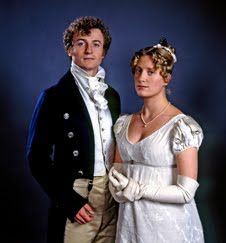
Mr. Bingley and Jane Bennet — the gentle, easy-tempered pairing whose courtship the novel sets against Darcy and Elizabeth's stormier course. Amiability matched to amiability.
1995
Mr. Collins and Charlotte
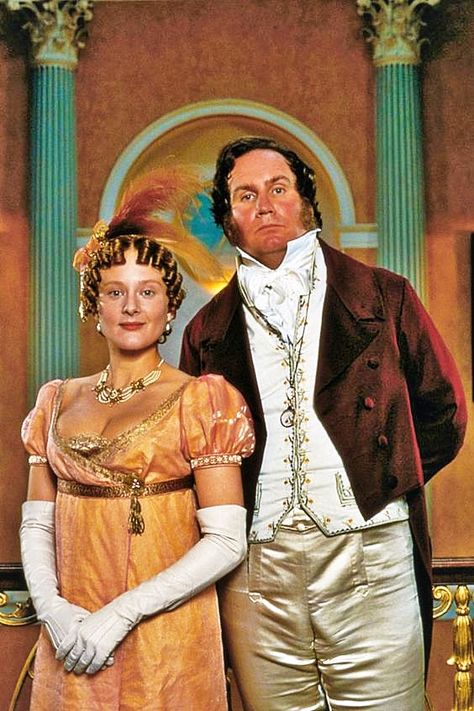
Mr. Collins and Charlotte Lucas — the practical match that gave Charlotte a home and Mr. Collins a mistress. A union of convenience, framed by the gilded architecture of Rosings.
1995
In the Parsonage Library
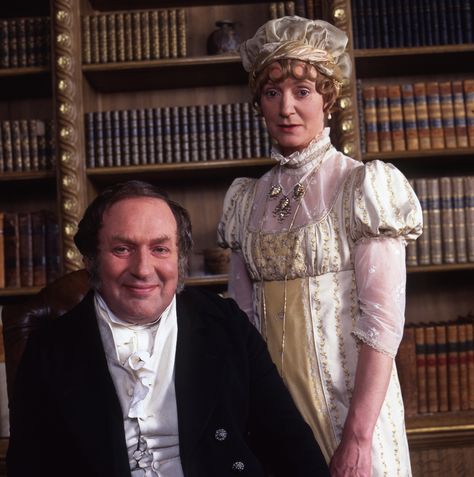
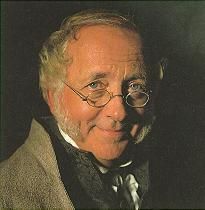
Mr. Collins and Charlotte in the Hunsford parsonage — the sitting room where Charlotte made her contented home, surrounded by the books her husband confessed he did not read.
1995
Mr. Collins
Mr. Collins — David Bamber's portrayal of the obsequious clergyman, all bows and Lady Catherine. The man who mistook pomposity for consequence, and a living for an inheritance.
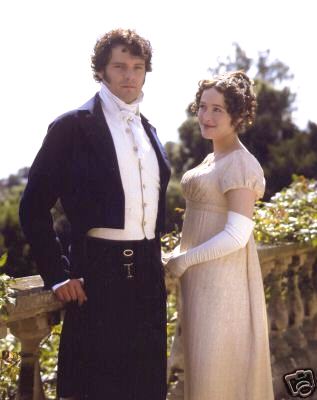
1995
On the Terrace
Darcy and Elizabeth on the terrace — the formal garden behind them, the careful distance between them slowly closing. A moment of ease at Pemberley, where the landscape itself works on the heart.
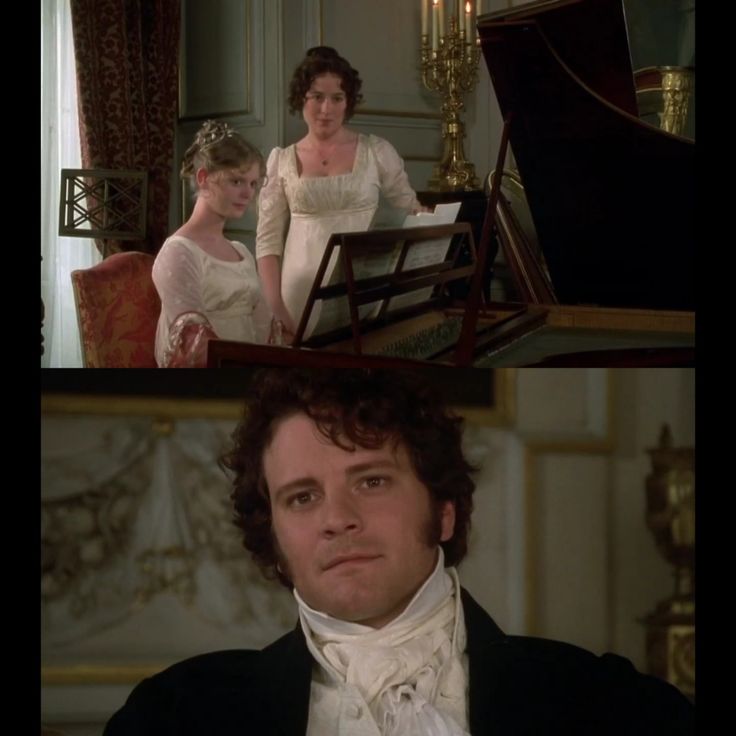
1995
Music and Silence
Two scenes from the series — music at the pianoforte above, Darcy's watchful portrait below. The accomplishments displayed and the silences kept, the two languages of Regency courtship.
The 2005 Adaptation
Joe Wright's 2005 film, starring Keira Knightley and Matthew Macfadyen, reimagined the novel with a naturalistic, earthy palette and a heroine of fierce intelligence. From the poppy fields of Hertfordshire to the candlelit assembly rooms, these images capture the film that brought Austen to a new century — and the fan culture that grew around it.
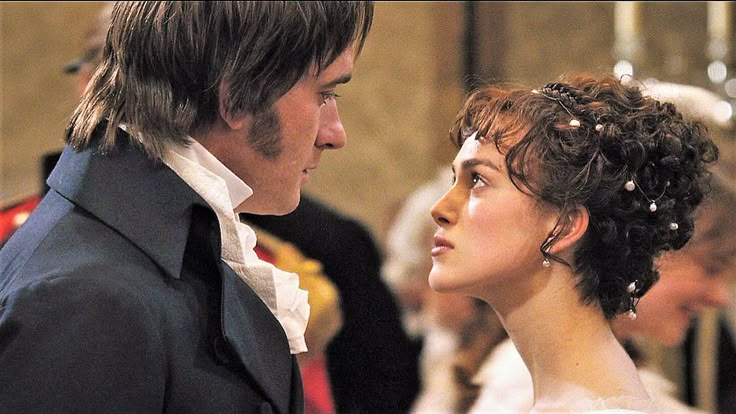
2005
Darcy and Elizabeth
Darcy and Elizabeth in profile — the charged proximity of Joe Wright's 2005 adaptation, where candlelight and silence carry the weight of the unspoken. Matthew Macfadyen and Keira Knightley in the film's signature intimate framing.
2005
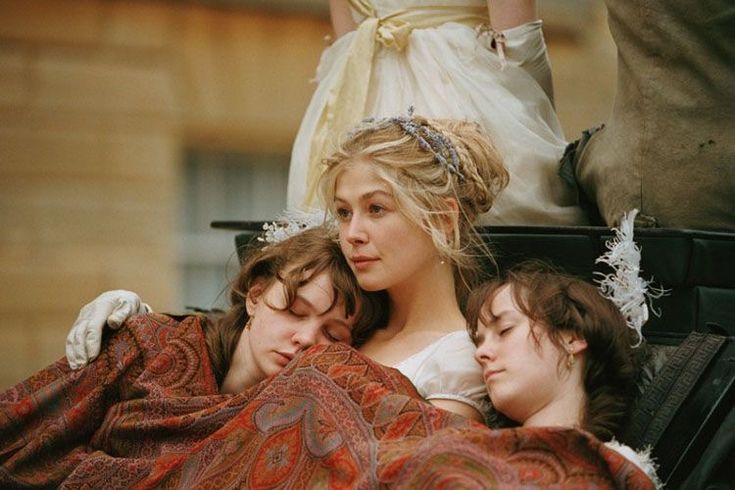
The Carriage Home
The Bennet sisters in the carriage — Jane awake and composed while her sisters sleep, a paisley shawl draped across their laps on the journey home from a ball.
2005
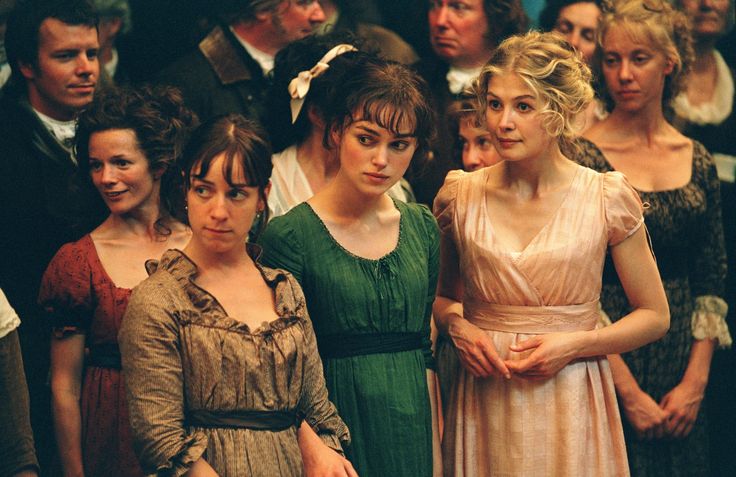
Elizabeth and Jane at the Assembly
Elizabeth in forest green and Jane in pale pink amid the Meryton assembly — the crowded room where every glance is noted and every whisper carries across the dance floor.
2005
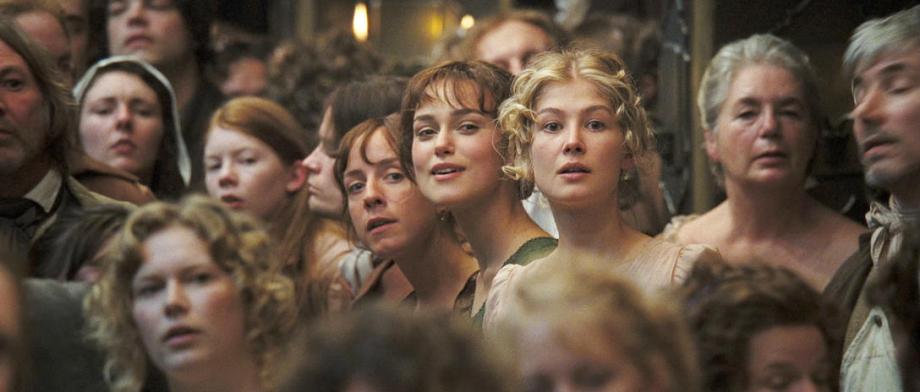
Among the Crowd
The Bennet sisters among the crowd at the assembly — the packed room where reputations are made and broken in a single evening, and where Darcy's pride first stings.
2005
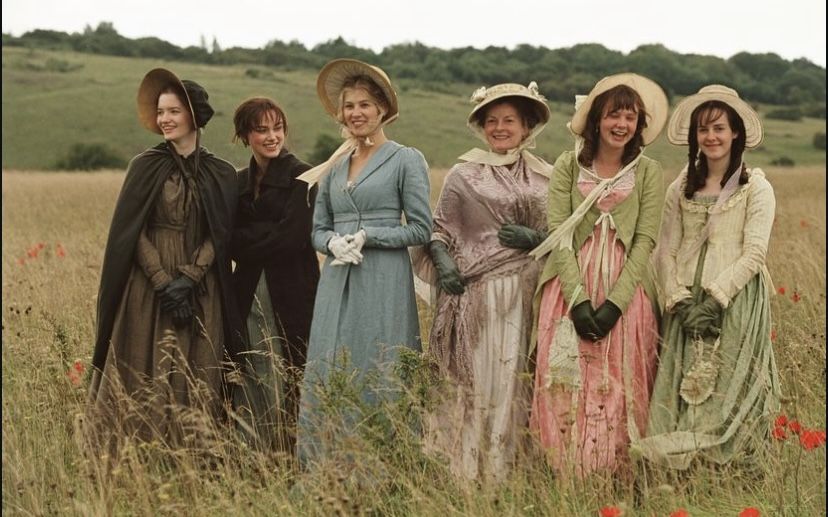
The Bennet Women Abroad
Six figures in a poppy-strewn field — bonnets, shawls, and the English countryside. The Bennet women walking out together, the landscape as alive as the characters in Joe Wright's earthy, naturalistic vision.
2005
Lovers in the Text
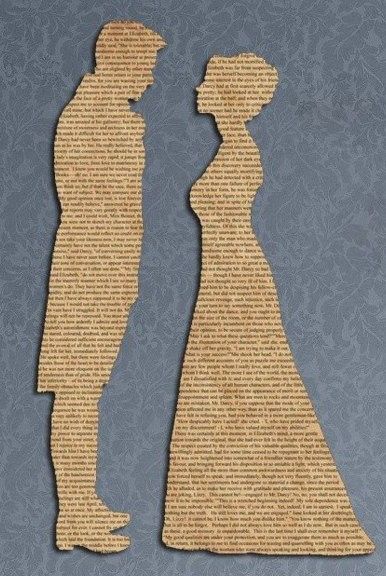
Silhouettes of Darcy and Elizabeth, cut from the very pages of the novel — the lovers formed from Austen's own words, set against a damask Regency wallpaper ground.
2005
The Many Faces of Mr. Darcy
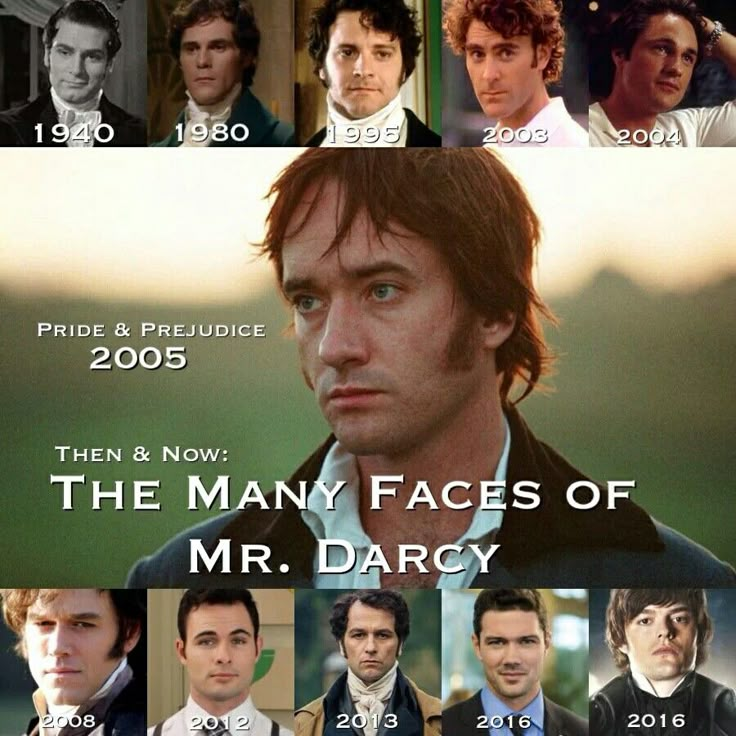
From Laurence Olivier in 1940 to Sam Riley in 2016 — the actors who have worn Darcy's coat across eight decades of stage and screen, with Matthew Macfadyen's 2005 portrayal at the centre.
2005
The Many Faces of Elizabeth Bennet
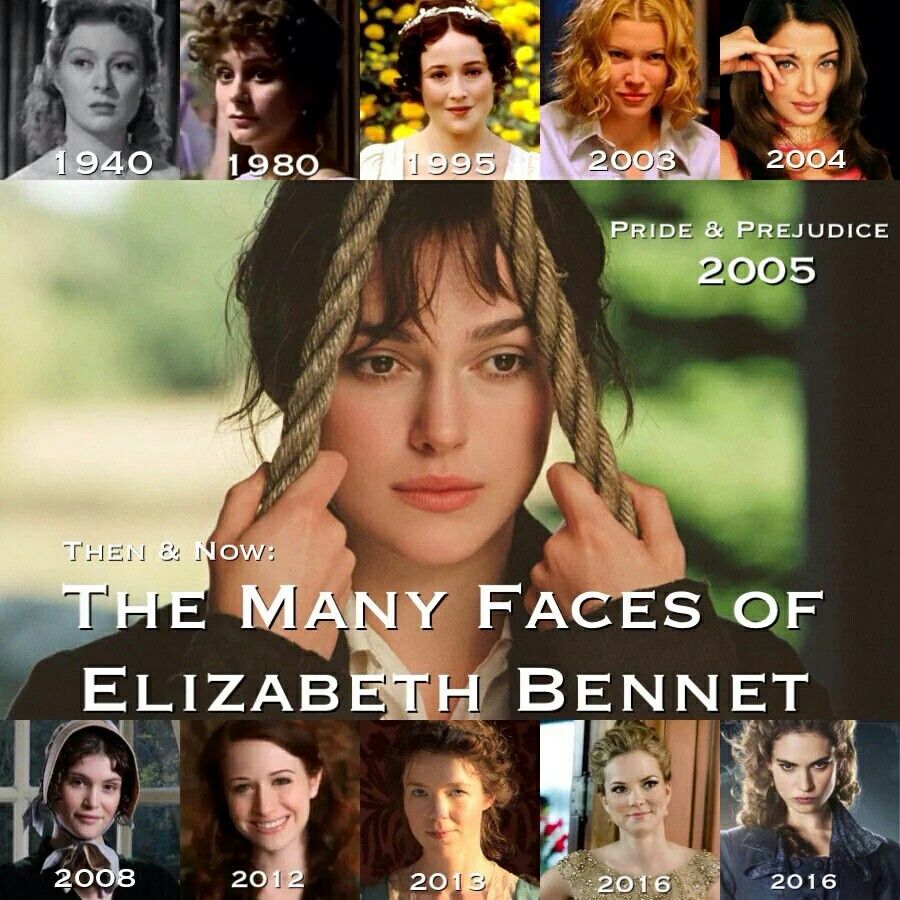
From Greer Garson in 1940 to Lily James in 2016 — the actresses who have embodied Elizabeth Bennet across eight decades, with Keira Knightley's 2005 portrayal at the centre.
2005
Jane Bennet, Ornamented
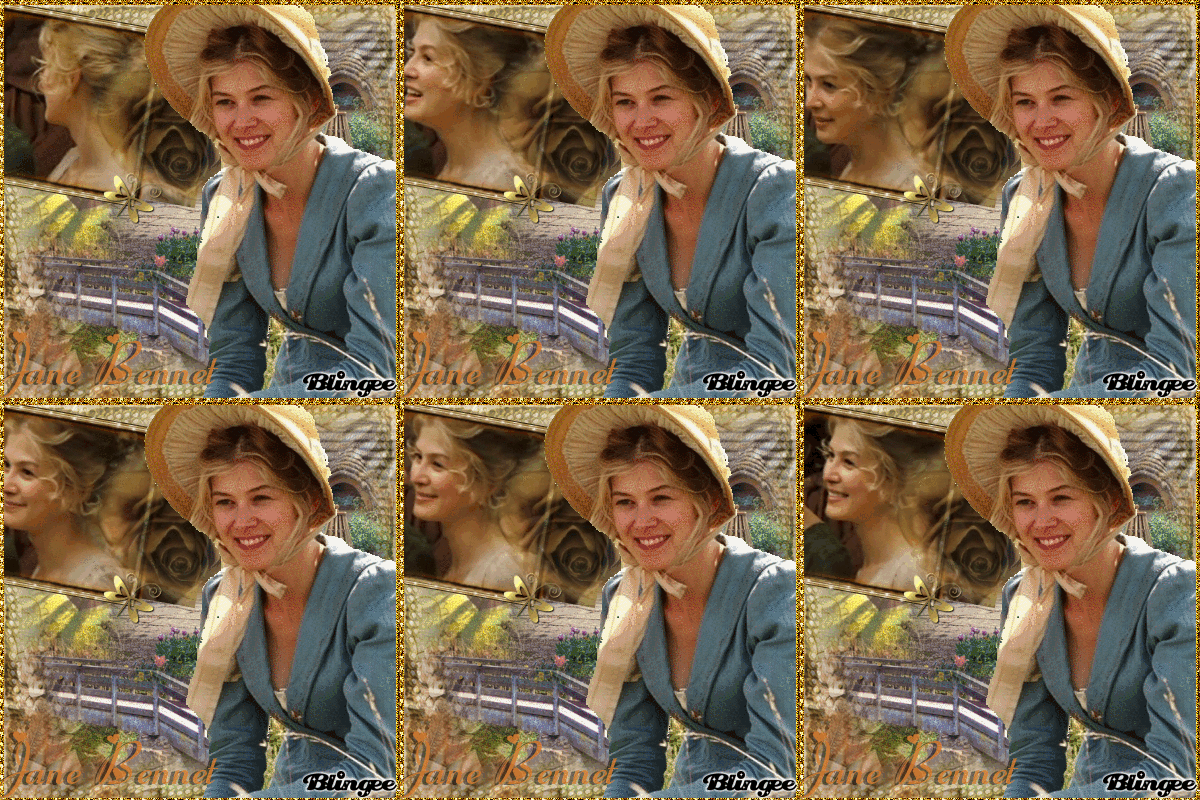
Jane Bennet in a glittering fan collage — Rosamund Pike's gentle Jane, framed in the ornamental, sparkled style of an earlier internet age. A labour of devotion from the fan community.
2005
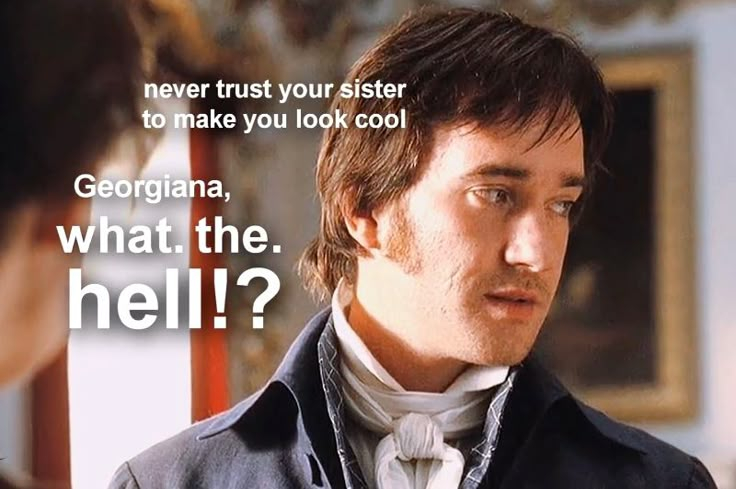
'Georgiana, What the Hell?'
Darcy's dismay, in meme form — the internet's affection for Macfadyen's bewildered Darcy, caught between social grace and what he suspects is sisterly sabotage.
Costume Designs
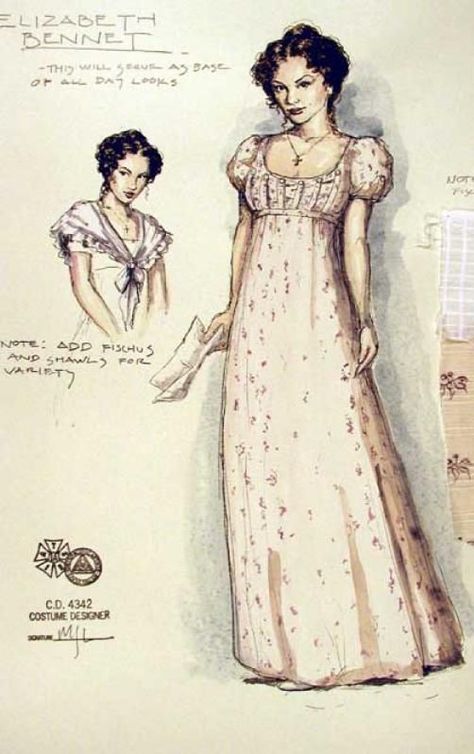
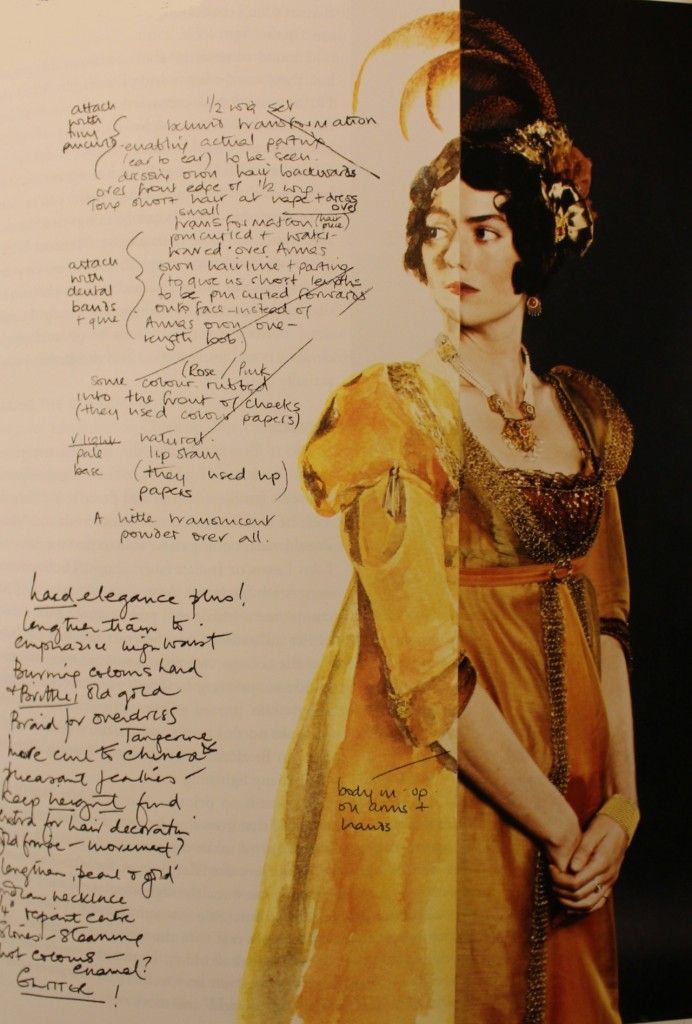
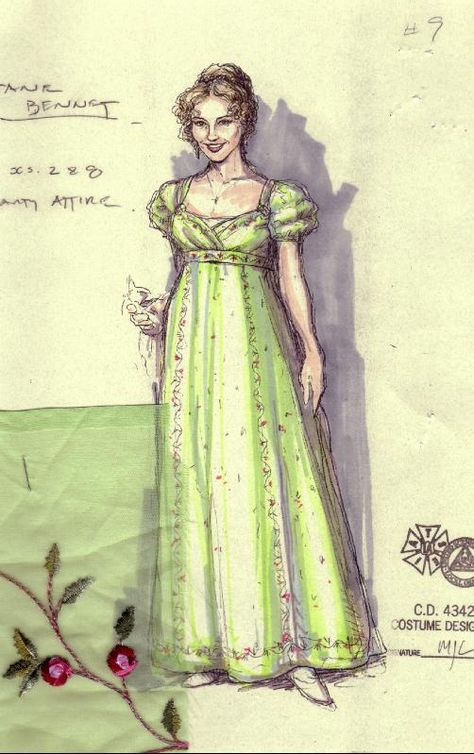
The production sketches that clothed the 1995 adaptation — watercolour renderings, fabric swatches, and the designer's handwritten notes for each character's wardrobe. From Elizabeth's base day gown to Darcy's blue tailcoat, these are the drawings behind the costumes that defined Regency elegance on screen.
Design #1
Elizabeth Bennet — Base Day Look
Elizabeth Bennet's foundational day gown — a cream dress with pink sprig pattern, designed to serve as the base for all her day looks, with fichus and shawls added for variety across scenes.
Design #2
Elizabeth Bennet — Formal Ensemble
An annotated costume design for Elizabeth's gold gown, with the designer's handwritten notes on hair, makeup, and jewellery — calling for 'hard elegance,' 'brittle old gold,' pheasant feathers, and an Indian necklace. A formal look for a scene of consequence.
Design #9
Jane Bennet — Party Attire
Jane Bennet's party attire — a spring-green gown with embroidered floral vines and puff sleeves. The eldest Miss Bennet dressed to be noticed, yet characteristically understated. A fabric swatch with rose-bud embroidery is pinned to the page.
Design #3
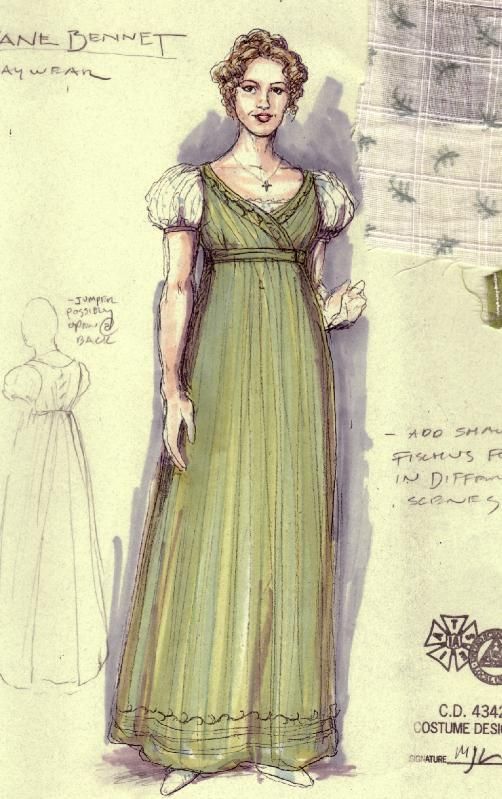
Jane Bennet — Day Wear
Jane Bennet's day wear — an olive-green gown with white puff sleeves and a cross pendant. The designer's notes call for small fichus to be added for different scenes, building variety from a single base.
Design #4
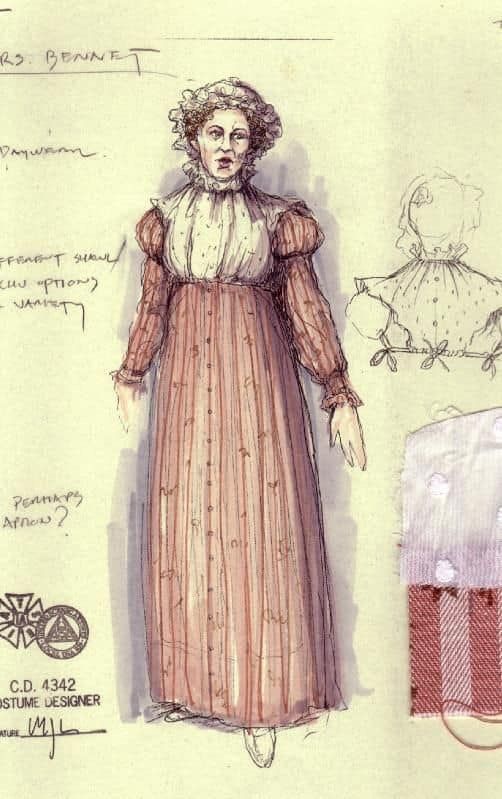
Mrs. Bennet — Day Wear
Mrs. Bennet's day wear — a rust-striped gown with ruffled collar and bonnet. The designer's notes consider shawl and neck options for variety, and muse on the possible addition of an apron. A fabric swatch is attached at lower right.
Design #19
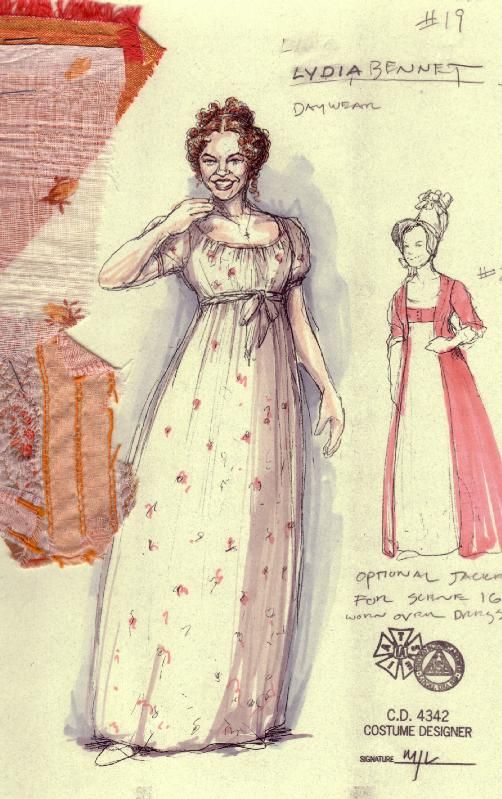
Lydia Bennet — Daywear
Lydia Bennet's daywear — a white gown with pink floral pattern and ribbon sash, with an optional red jacket for Scene 16. The youngest Bennet's wardrobe reflects her youthful, spirited character.
Design #38
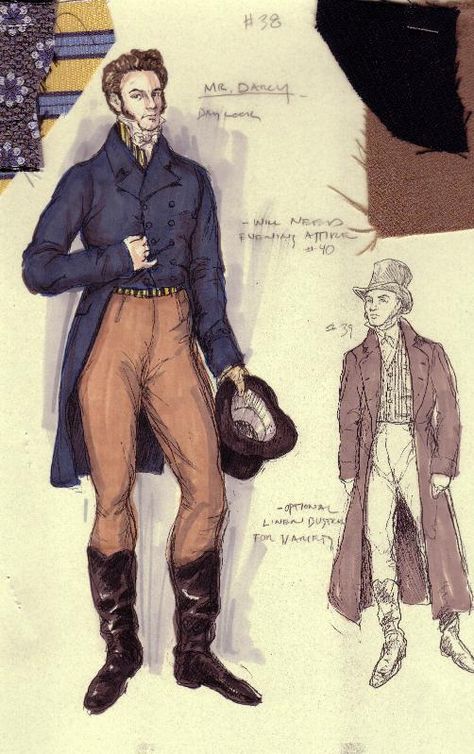
Mr. Darcy — Day Look
Mr. Darcy's day look — a dark blue double-breasted tailcoat with tan breeches and tall riding boots. The designer notes the need for separate evening attire (#40), with an optional linen duster for variety. Fabric swatches are pinned at the top.
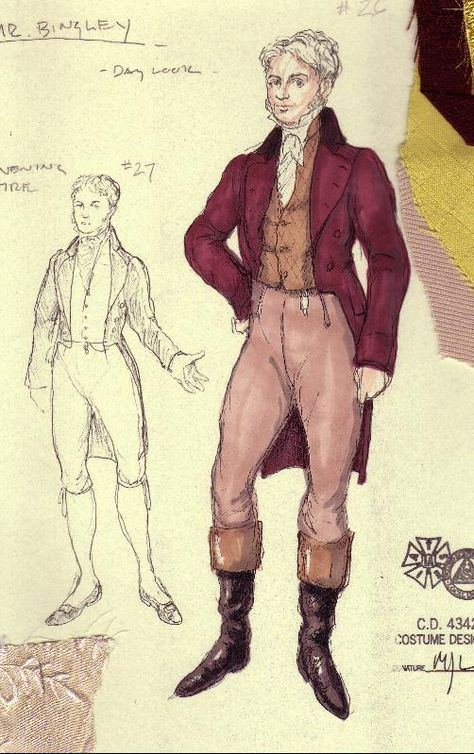
Design #26
Mr. Bingley — Day Look
Mr. Bingley's day look — a burgundy frock coat over a brown waistcoat, with mauve breeches and tall boots. A separate evening attire design (#27) is sketched at left. Fabric swatches in maroon and gold are attached at the top.
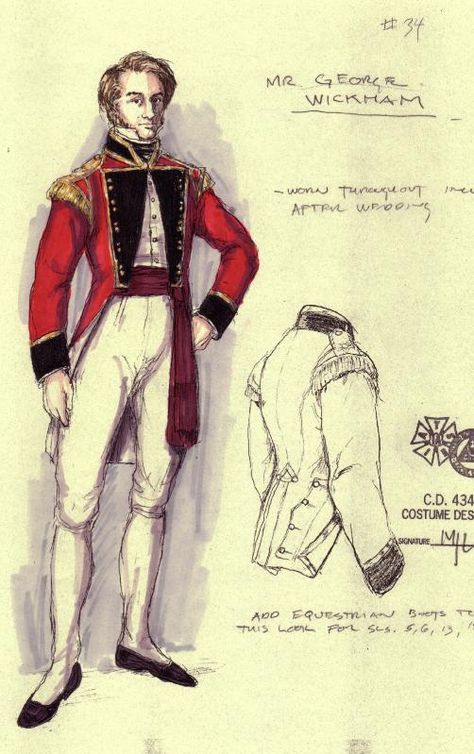
Design #34
Mr. George Wickham
Mr. Wickham's regimental uniform — a bright red militia jacket with gold epaulets and a dark red sash. The designer notes the addition of equestrian boots for riding scenes, and that the look is worn throughout, including after the wedding.
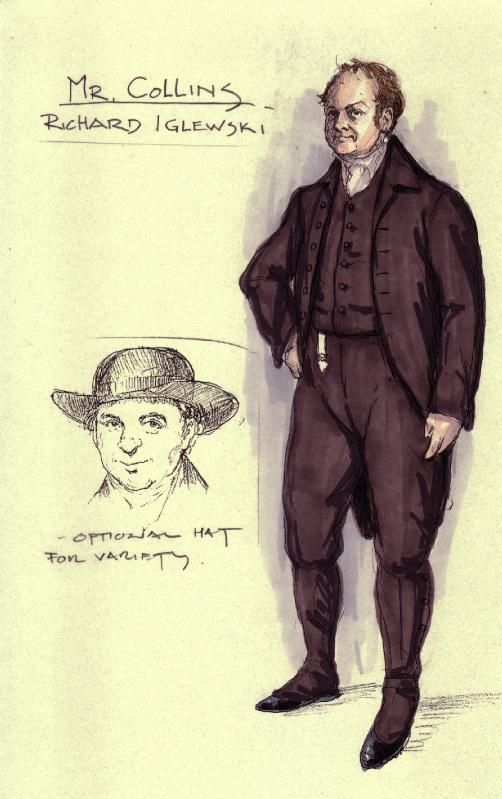
Design #5
Mr. Collins
Mr. Collins's costume — a dark, sombre ensemble of frock coat, buttoned waistcoat, breeches, and tall boots. The designer's optional hat sketch offers variety for the clergyman's many visits and social calls.